• home.
  • blog.
  • storytrain manifesto.
  • stories.
    • songs.
    • /answers.
    • poems.
  • publications.
    • articles & books.
    • videos.
    • interviews & reports.

storycodeX

~ The art of story in life, business and business life.

storycodeX

Tag Archives: change

Confessions from a Breakfast Table

14 Monday Apr 2014

Posted by Herr Dennehy in experiences, hiSTORY

≈ 5 Comments

Tags

Adel Tawil, Authenticity, Bangles, Beck, Bob Dylan, Boys 2 Men, Bros, change, Cutting Crew, David Bowie, Depeche Mode, drama, Elton John, EMF, expectation, Guns N Roses, Herbert Grönemeyer, Jimi Hendrix, Kurt Cobain, Lieder, listening, Louis Armstrong, lyrics, memory, Michael Jackson, Music, Nirvana, Prince, Prodigy, Rio Reiser, songs, Storytelling, surprise, Witney Houston

OK, I have a confession to make.

And this is really not an easy one.

So … There is this German pop singer. I really detest his banal, friendship-book-like lyrics, his schlager music style, hate his “I am your favorite son-in-law” attitude. Gives me goose pimples on my eardrum. Kind of my Lord Voldemort of Music, he who must not be named, let alone listened to.

But then something happened and forced me to reconsider … grrrr!

Crime scene, once again, the breakfast table. Sitting together with a little spare time, on our plates all the things children do that have the potential of becoming the source for an unexpected change of perspective. The girls had been singing this song called “Lieder” (“Songs”), My Musical Lord Voldemort’s latest œuvre, for days, almost off by heart. The song had also been permeating my sensitive auricles for weeks, in shopping malls, as background purring in soap operas, or on 40+ radio stations day in, day out, perpetrating the notion that the Lord was doing it again. Ooops style.

The girls’ tweeting at the top of their voices, knowing the lyric’s word by word, if not the meaning, forced (and continues to force) me not only to damage my Spotify playlist image, but also watch the guy’s very unsubtle video on PutPat like a trillion times in a row, and listen a little closer.

Now that really ticked me off! Liquid substance coming for from my lachrymal sacks listening to this kitsch? Ah, c’mon! For no rational reason at all: The melody is mediocre, the arrangement and production middle-of-the-road pop, the lyrics far from anything poetic, intellectually ambitious or sophisticated.

BUT … Voldemort is, in these 3 minutes and 50 seconds, well, not actually telling a story, but implying one. The big story of collective memory, brought to life through a vast number of song titles from the past decades of pop culture. Every single one of these titles hints at a very different memorial story in all the different hearts and minds of its listeners, snowballing emotions that the narrator may be hoping for, but surely cannot know or predict.

It’s a cheap trick, and not particularly well done, judged with the rational part of your self, but it works, with the emotional half. If you put aside your intellectual coolness barrier and let your thoughts take this trip down memory lane. Unbiased and, yes, with the eyes of a child – which is quite fitting in the case of “Lieder”, as most listeners who allow retrogressive tears to well up here probably were in their infancy or adolescence when the mentioned songs were in the charts or en vogue, hence surfaced from the masses of music to become music for the masses and memory makers for many an individual. Including me.

The songs that “Lieder” refers to can be found in the following playlist, and I BET you, you’ll be kick starting your hippocampus within seconds, with images that are completely different from the ones that I have, but I betcha they are there, if you allow them to.


And here’s the list in words, just for the record.

So what do I take from my own personal Lieder Experience, apart from a couple of pudent tears?

Our lives are indeed made up of stories. Not facts, dates and names, it’s the stories that make all of them come to life and live on in our memories, no matter how much time has passed. We will forget the names of people we went to university with, forget the bad marks we got in school, maybe even the name of the girl who dumped us when we were 14. But we will never forget the song that was playing on the radio, on our Sony Walkman or from the loudspeakers at a youth club party when we were feeling sorry for ourselves for whatever reason. Or happy. Or whatever the feeling was. And behind every feeling, there is a story.

So whether it’s Walk like an Egyptian, When Doves Cry, Voodoo Child, Like A Rolling Stone, Just Died In Your Arms Tonight, Bochum, Don’t Let The Sun Go Down On Me, What A Wonderful World, Dancing With Tears In My Eyes, Heroes, Unbelievable, Purple Rain, Firestarter, I Will Always Love You, You Are Not Alone, Welcome To The Jungle, Personal Jesus, Insane In The Brain, When Will I Be Famous, König von Deutschland, End Of The Road, Loser, Killing In The Name Of, or Come As You Are … there’s probably a million stories secured in a million hearts and connected to one or more of these songs, maybe even one or more per specific lyric line.

And that’s the sole, but powerful beauty of “Lieder”.

No, allow me to correct myself, there is indeed another beauty to it: It makes me look forward to the day when my two little ones are big and (hopefully) interested enough in all those pearls that He-who-must-not-be-listened-to is singing about, maybe even like one or the other song or story. And probably the song “Lieder” itself will, whether I like it or not, become a new link in my chain of songs worth remembering – not because they were especially great, but because they remind me of special moments of my life.

Like sitting at the breakfast table, morning in, morning out, with two little voices of Germany listening to, watching and reciting  this tune, regardless of the tight schedule before school-kindergarden-work. And reminiscing stories, thoughts, dreams and feelings surfacing after ages of subconscious burial.

After all, with music, it’s like with important scents in our lives: Even though in hindsight they might actually stink, they take you back decades in a flash … and memory is indeed a gracious, merciful and forgiving companion.

Share this:

  • Click to share on X (Opens in new window) X
  • Click to email a link to a friend (Opens in new window) Email
  • Click to share on LinkedIn (Opens in new window) LinkedIn
  • Click to print (Opens in new window) Print
  • Click to share on Telegram (Opens in new window) Telegram
Like Loading...

11 Ingredients for a Successful Business Story

06 Sunday Apr 2014

Posted by Herr Dennehy in Storytrain, What is STORY?

≈ 1 Comment

Tags

authentic, Authenticity, brand journalism, brand storytelling, business storytelling, change, conversations, corporate storytelling, Don Quijote, expectation, hero, Human, listening, Storytelling, surprise, target groups, true story, Truth

Here are 11 ingredients that will get you to your successful business story.

It’s a lot of hard work, but it’s worth the effort. It needs determination, honesty, and courage. The willingness to introspect, listen, experiment, learn, and optimize based on what you learn.

These ingredients, or tips, don’t necessarily need to come in the below order, nor does it suffice to go through all of them just once, over and out, success here you come! There’s a lot of inevitable repetition in these efforts, a kind of “perpetuum mobile of business story”.

Here we go:


Listening1. It’s listening time, the age of attention and conversation. So: Listen to your audiences. Find out who they really are. What they really need, what they want. And where and how they want it.
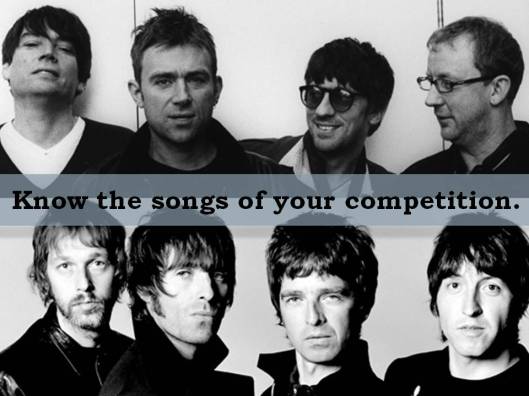
 

Competition2. Observe your competition. Don’t be a “Me Two”. Be different. Be authentically you.


Big Story3. You can only be you, if you know who you are. So: Find your big story, your identity, your character, your DNA. Again, this can only be achieved by listening. To yourself, your own organization from top bottom, left to right. To your audiences (or target groups, as you might call them). See where the delta is, where it matches, where it doesn’t. And somewhere amidst that cacophony of data: there’s your big story. Once you find it: stick to it!
 

Small Stories4. Continuously search for all the stories within and without your organization that fill your big story with proof and bring it to life – credibly and authentically, verifiably and true. No matter how small or irrelevant they may seem: They are the only currency you have that differentiates you from your competition. Messages, Brand Ambitions, Visions, and all those bullshit-bingo Whatchmacallits are interchangeable, just hot air, written by expensive agencies to make you feel special. What truly makes you special are your stories, and your people or the people who make up your target audiences, for they are your stories’ heroes. And nobody else!


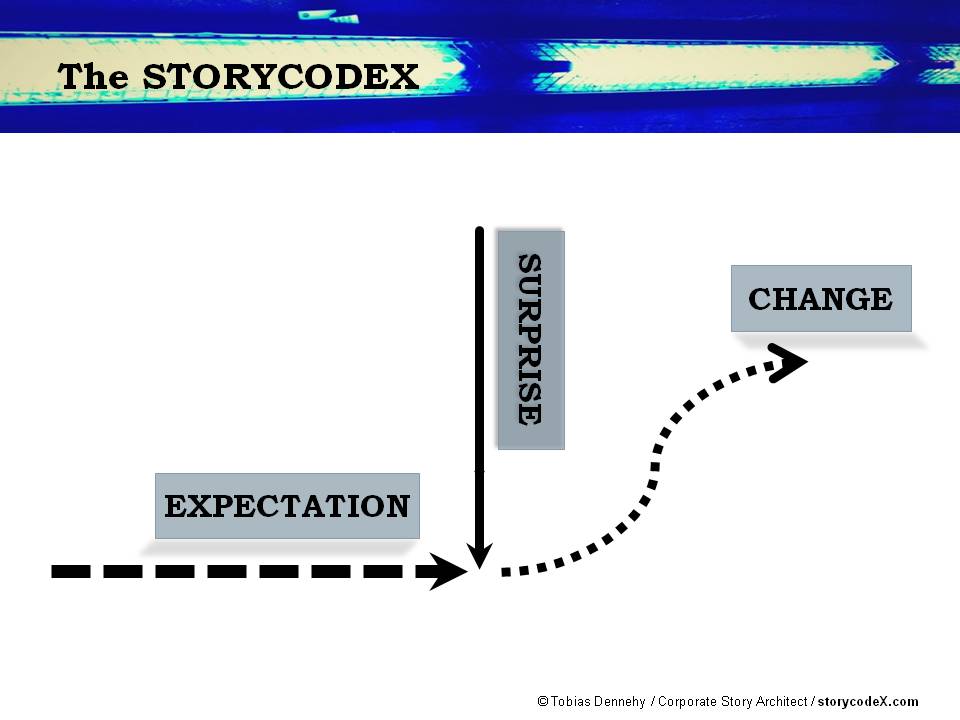
Formula5. Become Sinatra, find your way, and then do it your way. If you believe in your idea’s brilliance and capability to tell all your stories great and small, the stories that in the end all make your big story, the accuracy of fit to your character, then go for it! Always follow The STORYCODEX of Expectation, Surprise and Change … and eliminate the taste factor. Nothing worse than management killing an idea just because they can. Because they have a position within your hierarchy that demands of you to ignore or tolerate that they don’t have a bloody clue what they’re talking about. Oh and: If these grey-suited folks demand of you to make their product the hero, remind them of the Ninth Commandment, the one about lying and false witness. A product can NEVER be a hero, and thou shalt never attempt to do so, thou will fail!


Pilot6. If your idea, your concept is truly brilliant, unique, something different, maybe even a little crazy: There’ll be armies of Bedenkenträger in their trenches, armed with “Buts” and “We’ve never done this before’s”. This should encourage you, not the opposite: You’re probably on the right track. To get past the army of doubters, call your project a “pilot”. Management feels comfortable with pilots, has a finite touch, limited risk and all that crap.


Windmills7. Once your pilot’s taken off, make no casualties, no compromises. Be resilient and consequent. The windmills of doubt and Schadenfreude will be blowing into your face from all directions. Don’t let them stop you. And find yourself a trustful companion who will stick by your side, even if one or the other of the journey’s adventures turns out to be a failure or at least different than expected. If this companion is also willing and able to tell your story and stories, a good and true storyteller, who doesn’t necessarily need to be an experts in your field of business, all the better. He (or she) just needs to understand you and be able to translate your management brand identity mission-vision-value-proposition messaging bullshit into stories somebody actually wants to hear.


Jacko8. Even if you’re out (or in) there alone, all by yourself: Be consistent, stick to who you are, what you believe in. Work on your own little moonwalk and surprise audiences and critiques, leave them awestruck.


Measure9. How do you convince critiques and Benkenträger, prove them wrong? Right: through hard facts and figures they can’t neglect or deny. Seriously, anything procurement sharks, engineers or sales guys trust more than numbers on a paper or screen or power point? So give em what they want: Develop objective KPI’s, measure every customer’s every movement and interaction with your story, present the results in a comprehensible and comprehensive way, and then: Poke your tongue at them, or – if the figures suggest so – have the guts to admit they were right, and it didn’t work.


Trust10. All along the way, every second of your adventure of finding yourself, understanding your competitors and your audience(s), finding all your stories great and small, finding your formula, pulling it through and sticking to your idea like Jacko to white socks … make sure you do it with someone you trust. Someone on your wavelength, with the same vision, as well as balls and management position to back you up when the FBI is up your fundament to shut your business down.
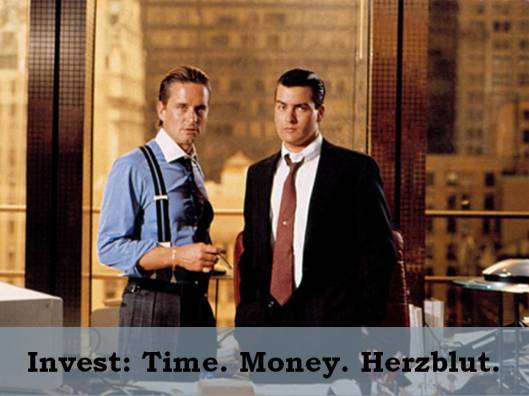
 

Invest11. Last, but oh so very not least: Every truly unique, innovative and successful business story needs … investment. Not only of money, although it needs a lot of that also, make no mistake; investment in the stories themselves, of course, but also for the stories’ marketing, as nobody is really waiting for your corporate story! But you mainly need to invest a looooot of time, and need to give your story project time to grow, like a tree: from seed to graft to full-grown plant. In a nutshell: You need Herzblut: belief, commitment, passion, and stamina.
Good luck!

Share this:

  • Click to share on X (Opens in new window) X
  • Click to email a link to a friend (Opens in new window) Email
  • Click to share on LinkedIn (Opens in new window) LinkedIn
  • Click to print (Opens in new window) Print
  • Click to share on Telegram (Opens in new window) Telegram
Like Loading...

The Power of Story on a Sunday Morning … with Löwenzahn.

10 Monday Mar 2014

Posted by Herr Dennehy in experiences, Stories worth watching

≈ 1 Comment

Tags

business storytelling, change, drama, education, entertainment, expectation, Fritz Fuchs, hero, Human, Löwenzahn, lep's world, little big planet, narration, Peter Lustig, plot, script, subway surfer, surprise, true story, writing, Yasemin Saidi

It was one of those Sunday mornings I love: The kids let you sleep in (relatively) long, the weather is Irish, and prevents your bad conscience from creeping in when you decide not to leave the house all day.

I trot to the breakfast table and put the espresso macchinetta onto the stove, waiting for the promising scent to fill the flat, inviting the rest of the clan to leave their caves. Table is laid, time is not an issue, I just love it.

This particular Sunday was a special one, also in another way. For my daughters, as they were able to take advantage of their parents’ laid-back, rainy Sunday mood, and watch a little TV in the kitchen. And special for me, as I more than happily interrupted the breakfast cleaning-up routine to watch a brilliant piece of self-reflexive, story-in-story narration with them, made for kids, but very fulfilling for me as well. It was an episode of one of Germany’s most renowned, most famous, and best children’s programs called “Löwenzahn” (English: Dandelion).

loewenzahnSe Dschörmens amongst my readers will know this program that started way back in 1981 very well, along with its quirky former hero Peter Lustig (English: Peter Funny) who lives in an old, cozy construction trailer in the fictitious city “Bärstadt” (English: Bear City) – and has numerous entertaining and educative adventures to master.

The series still exists, since 2006 with a new hero called Fritz Fuchs (English: Fred Fox), and every one of the so-far more than 300 episodes is worth a kid’s and a grown-up’s while, probably worth a blog post for every single one. But episode 298, which I am referring to here, is called “Geheimnissvolle Botschaften” (English: Mysterious Messages). What could also serve as a nice title for many a corporation’s annual report, is in this case true storytelling at its best, storytelling about storytelling, storytelling about telling stories, storytelling about scripts, writing and the art of language, and the value of narrative traditions. Yep, education on a Sunday morning!

…

…

It’s about kiosk owner Yasemin Saidi and her quest to unveil the mystery of an ancient-looking parcel she receives. A parcel from a far-away country, with an already faded, oriental handwriting, from no one less than her Persian grandfather who has recently passed away. The parcel contains a riddle for her to solve: Should she be able to decipher three characters from three different writing ages, there will be a treasure waiting for her, writes her granddad. She begins her treasure hunt aided by a pawky boy from next door. A hunt that leads them back to the history of storytelling, oral lore, campfire fairy tales cave paintings to the beginning of writing and further on and on through time and historical imagination.

At one point, she tries to memorize a story she loved her grandfather tell her when they were still together in Persia, but she simply can’t remember the end – much to the boy’s dismay, who is hanging to her every word. In expectation, hoping for a surprise ending, for the heroine’s fate to change for the better, but: Yasemin simply can’t remember. Until, in the end, when the two of them manage to solve the riddle and decipher the characters, they find her grandfather’s treasure … and she does remember, or better, is helped to remember: The hidden treasure is all stories her grandfather ever told her, put to paper by himself and collected in an old suitcase, preserved for her to tell and carry on – and never to forget.

…

Our Sunday morning (or was it still morning?) had come to an end, the kids were happy and entertained, their father entertained and happy. Happy that the art of storytelling, the power of language, and the value of writing are still a valued piece of children’s entertainment in the age of Subway Surfer, Lep’s World and Little Big Planet.

Thanks, Löwenzahn! 🙂

Share this:

  • Click to share on X (Opens in new window) X
  • Click to email a link to a friend (Opens in new window) Email
  • Click to share on LinkedIn (Opens in new window) LinkedIn
  • Click to print (Opens in new window) Print
  • Click to share on Telegram (Opens in new window) Telegram
Like Loading...

Three Arrows. Three Words. One STORYCODEX.

03 Monday Mar 2014

Posted by Herr Dennehy in Ideas, Storytrain, What is STORY?

≈ 2 Comments

Tags

Aristotle, change, digital storytelling, expectation, Robert McKee, storycodex, surprise

People often ask me: What is a story? And what isn’t?

Where to begin? Where to end? How to convey the essence of this ancient concept in a so-called elevator pitch – which is even much shorter than the infamous management summary?

Epic’s have been written, filmed, recorded about this topic. From Aristotle to McKee. All very well, all very correct. But also: all very long.

This is my elevator-pitch attempt at less-than-twitter brevity, a visualisation of story motion. Three arrows. Three words. My storycodeX in a nutshell:

herr dennehy's storycodeX

You can always apply more detail. More academia. And I’m sure I will, bit by bit.

But for me: This is it.

Agree?

Disagree?

Why?

Let me know!

cheers
herr dennehy

Share this:

  • Click to share on X (Opens in new window) X
  • Click to email a link to a friend (Opens in new window) Email
  • Click to share on LinkedIn (Opens in new window) LinkedIn
  • Click to print (Opens in new window) Print
  • Click to share on Telegram (Opens in new window) Telegram
Like Loading...

Stories worth watching #4: The Voyage of Sumeet and Chetna

26 Wednesday Feb 2014

Posted by Herr Dennehy in Stories worth watching

≈ 6 Comments

Tags

authentic, Authenticity, brand storytelling, British Airways, business storytelling, change, corporate storytelling, digital storytelling, documentary, drama, expectation, Hollywood, personal stories, plot, Sumeet and Chetna, surprise, true story, Truth, video storytelling

This story literally came flying into my inbox the other day, the subject merely indicating: “British Airways is also doing personal stories now”. The sender surely seemed to know how to catch my attention … and there was no comment as to whether BA’s attempt was successful, in the sense of good-story-successful, not youtube-clicks-successful. She left that to me to find out …

Overcoming an instinctive cerebral reflex of rejection by the notion that this is probably just another ad in sheep’s (or cheap) clothing – and henceforth the source of evil that continues to insult my intelligence by insinuating authenticity while actually shouting out “CLICK HERE AND BUY ME, STUPID!” –, I followed the link anyway. And I was rewarded; in one way, not in every.

…

…

OK, there’s a decent slice from the cheesy cake mixed into this film, but: a really good story it is. And if it’s a well-told story, I do admit to being susceptible to some nice, unpatronizing cheesiness every now and again, that lets me escape from our technocratic, data- and perfomance-driven world … hmmm, maybe I’ll start a list of the best-told and produced stories that made me cry and were not good despite, but because?.

I was glad that nobody was watching when my eyes premiered this film in the office … 😉

…

What’s so good about this story?

  1. That it makes me experience the “like me” effect. Even though it’s plotted in a world completely foreign to my own. Even though the heroes’ sufferings are (on the outside) something I will (probably and hopefully) never be exposed to myself, but (on the inside) something that’s as close to my heart as Romeo and Juliet, Florentino Ariza and Fermina Daza, or László de Almásy and Katherine Clifton.
  2. That it manages to take the seemingly very specific story of an organized, yet later love-match-to-be marriage and its challenges in modern Indian life to the broader sphere of She and He. Of Love and Sacrifice. Of Desire and Deprivation. Of Longing and Letting Go. And so on. Universal themes of togetherness and separation and all the shades of grey in-between. It doesn’t matter, whether our two heroes are Indian, American, German, Chinese or African: These kinds of experiences are all the same, all over the world. We know them, and we feel them when we see them – and feel even more when we experience them as true (and I haven’t found any lead anywhere yet that this story is scripted or fake).
  3. That it clearly follows the storycodeX of Expectation, Surprise and Change in a way that is not totally surprising, granted, but despite its predictability it is convincing and true to its own inner truth. Even though I had a pretty good feeling for how the story will end, I still didn’t want to miss the satisfaction of the closure living up to my expectations. And it did.

Still … Why is this story and especially the overall British Airways campaign behind that story so very far from perfect?

  1. First of all: the music. It begins OK, adequately subtle as the story unfolds, and the hero introduces himself. But after a minute already, the unwelcome feeling creeps over me that a soundscape is about to invade my ear conch, and oh how I hate that. At minute 2:45 it almost becomes unbearable, this crescendo of paternalism, acoustically giving me the order what to feel in a couple of seconds. Again, how I hate that. Although I also hate it when it works, when my heart answers through my lacrimal glands while my brain is saying “No! Don’t! They’re just manipulating you!”.
  2. The documentary start of the film (if you ignore the fast-motion sequences, which you definitely should, they’re so eighties and boring!) maybe does not have the intention of fooling me, but it does. Because in the end it turns out to be an attempt to imitate Hollywood. Especially after minute 3:30, this becomes all too evident: slow motion, seemingly staged or at least retook scenes, too much forced effort on an image-text match. At the end and with Sumeet’s fit-to-campaign-and-landing-page-title slogan “Sometimes we have to go really far to get close”, this becomes even blunter – and leaves a bad taste in my mouth. I hate being fooled.
  3. Speaking about the campaign (the above arguments are a little prone to taste, but the following is a fact): It’s a laudable one, with a nice and true core message, showing the authentic benefits of a brand and its actions for its recipients (or more abstractly: target audience). This campaign goal surely is reached (emotionally, that is, I have no knowledge of the quantitative results apart from 1.8m YouTube views to date). But, in the end, it turns out to be just another poor attempt of deviation, pretending to want one thing (in this case: make people happy and tell a good story), when in the end it’s ever so obviously about another thing (in this case: make people book flights with BA, and not just somewhere down the Brand and Sales Funnel, that would be OK, and expected, and accepted, but RIGHT NOW, STUPID! No subtleness, no intelligent weaving of one story into a greater theme or idea.). When I enter ba.com/getcloser, I don’t (as I would have hoped for) get more content of the kind I have just seen, that is other example stories of BA’s impact on human happiness, not even a “more to come” message in case this is the first episode of a planned series. Nope, nuthin. Instead, a simple, plain, in my eyes insultingly profane flight booking page as you actually would expect at BA.com, not on its apparently os so human “get closer” campaign landing page. And then I even find out, how our happy heroes are exploited for a whole bunch of other online marketing measures such as Facebook quiz asking me (as a story seeker!) how close I am to whomever. I can even win a flight to get even closer. Can it get more right in the face? Phew. And URGH.

A shame. An insult, And a wasted chance of a sustainably credible campaign that started off so promising – with a good story.

Share this:

  • Click to share on X (Opens in new window) X
  • Click to email a link to a friend (Opens in new window) Email
  • Click to share on LinkedIn (Opens in new window) LinkedIn
  • Click to print (Opens in new window) Print
  • Click to share on Telegram (Opens in new window) Telegram
Like Loading...

This is NOT a story #1: The Dylan Chrysler Experience

10 Monday Feb 2014

Posted by Herr Dennehy in This is NOT a story

≈ Leave a comment

Tags

Aristotle, Bob Dylan, brand journalism, brand storytelling, business storytelling, change, Chrysler, Clint Eastwood, conversations, corporate storytelling, David Bowie, digital storytelling, Dirty Harry, drama, expectation, hero, Louis Vuitton, plot, surprise. suspense, tension, true story, video storytelling

Sometimes, a man’s gotta do what a man’s gotta do. And sometimes, the world actually takes notice. Sometimes even a little too much. As in the case of Mister Robert Zimmermanns’ latest coup in a lifetime effort to alienate his lovers, re-assure his haters, and simply do everything possible to not fit into one of those boxes that our world so loves to create to get a grasp at the ungraspable: Life.

I’m talking about the new piece of advertising Dylan has allowed US car manufacturer Chrysler to produce using him as a mighty testimonial:

…

I’m neither going to chime into the (ridiculous and so 1965-Newport-Folk-Festival-like) fundamentalist fan mob’s “OMG! He’s selling out to commerce” outcries, nor will I (at least not yet, that is…) offer any half-baked analysis of why Bob is such a genius, why he’s never there, always the passenger of a slow train coming with no direction home, always already part of a new morning, heading for modern times, leaving blood on the tracks while his worshippers are still marching on desolation row towards the Gates of Folk Eden. No, others have done that before, probably better than I ever could.

Which is why it does indeed surprise me that he still actually manages to surprise, at least some, with his ambiguous “it ain’t me, babe” smile on his face. If it were up to me, he could advertise Pepsi refreshments or Victoria’s Secret ladies garments, I’d still not stop to admire the Zimmermann Phantom and his many ways of deliberate and couldn’t-care-less fanielation. Oh, he already did??? Ahh, whatever. 😉 Those two were at least entertaining, somewhat intelligently composed, and equipped with some more Dylan-esque “in-between-the-line-ness”.

No, what this here is about is my bewilderment by the fact that the Chrysler spot simply is a poor piece of pathetic advertising – and story-wise plainly sucks, because it isn’t a story, but pretends to be. And that a man, who has created himself a well-earned reputation as a musical storytellers of and about his time, agreed to be its centerpiece (I won’t call him hero in this respect, as it’s neither heroic what he’s doing or saying, nor in any way dramatic in the Aristotelian sense to make him deserve this title).

Why Chrysler is doing this, and exactly in this fashion, is clear: It’s an American company, more up-to-date American never than here, appearing desperate and back-to-the-wall-ish, seeing hopes dashing in many an economic sector; automotive, for example. They draw the marketing card of desperation (by the way: already Act II of the company’s Drame du Deséspoir after Act I where they threw Dirty Harry into the ring two years ago): Take a well-known, respected, but still a little controversial celebrity (you know they’ll love or hate him for this!), use clichemotional imagery of what makes America’s nerves shake (no way to err with cheerleaders and cowboys on horses in slow-mo, a little stars and stripes and historical analogies, babies and hard-working factory laborers!), polarize and tease your rivals a little (not too much, just a little to add spice to the saltless soup and give the regulars’ table something to talk about), and end with the all-too-expected “Wir sind wieder wer!” message stolen from se Germans in 1954. Oh, and not to forget: Pay millions to place this ad in front of the world’s eyes at the Super Bowl finale – where reach really still means conversion and conversation. About what, that’s another question.

Why Bob Dylan is doing this, Alias knows. Maybe to escape from the burden of being witty, erudite, convoluted, and the role model of more than one generation all the time, into the shallowness and immediacy of corporate advertising every now and again? Maybe just for the fun of acting while actually being an actor and not a singer-songwriter? Maybe for the dosh? Maybe, maybe, maybe … who cares? I don’t.

But what I do care about being insulted by bad ads and videos and films that pretend to be stories. Why do I think this one is so bad, may have become obvious above, below and in between these lines so far, but a friend of mine recommended I add a kind of management summary at the end of my posts to avoid the feeling of “Wow, that was interesting, but, err, what was it about again?”. So here it is, my dear Performance Passionist: 😉

  1. Nothing’s happening. Nothing’s changing. It’s simply boring. I wouldn’t want to watch it to the end without all the media fuzz about and Bob Dylan in it. I would leave the latest after 30 seconds.
  2. No surprise. No one manages to surprise me here, and seems like no one even wants to. The surprise of seeing Bob Dylan make-up-ed and hair-dyed after 18 seconds is the only surprise you get – and I’m left with the fear that the analogy of Dylan not holing any ball at the end might have a deeper meaning. A message triangle gone video.
  3. No hero, no plot. There is no hero, only a narrator narrating through a non-existent plot. But actually narrator Dylan ain’t telling, he’s just talking, saying things that only scratch the surface of America’s story and the story of every American shown in these two minutes. Shallow and predictable. And don’t mistake the narrator for the hero, neither the story-immanent one nor the one you think you’re seeing. It’s only Bob (whoever that is) playing someone else.
  4. No expectation. Neither within nor without this advertisement am I expecting anything, let alone more – and arousing no expectation is the worst mistake being made here. The fact that nothing is happening could, however, be countered by the tension and expectation of what might happen AFTER the short scene just shown. As it was actually quite successfully attempted in Dylan’s Victoria’s Secret spot in 2009, or in last year’s Louis Vuitton spot with David Bowie. Both not stories per se, but the beginning act of a potential plot continuation, a story teaser, making me expect more to come, wanting to know, if and how this scene continues. Not so with The Chrysler Boredom.

The only chance this spot has for a longer-term success and more sustainable, content-based conversations (beyond the “Have you seen the latest Super Bowl ad with Dylan?” reflex) about the big theme the ad is suggesting (“The people of America and their love to manufacture something with their own hands that provides a living for their families and a sense of pride to be giving the world something it wants, needs, and maybe even copies”), is a prolongation of this mere advertising pretension into the digital space.

A prolongation that includes every little story of every single potential hero in this two-minute film. The young lady wrapped in the Stars and Stripes at second 0:08. The grateful-looking old man at second 0:14. The waitress serving him. The mother with her(?) child at second 0:54. The factory worker at minute 1:04. Or any of the men standing behind the pool table like tin soldiers at the end. These stories, if indeed they exist, would prove that the above big-story suggestion is not just advertising bullshit, that the company able to pay so much money for production and airing of this ad actually is capable of lighting the spark of pride in these peoples’ hearts. That it maybe even manages to help improve their lives. Most importantly, this would prove that they’re not all just casted models for a seemingly authentic TV spot.

… And then there would be the story of this old man with the dyed hair who wants us to believe that he is who he seems to be, that he is actually someone we know, someone like you and me, and not just some Alias playing a role in innocent Billy the Kid’s endless fight against the unjust hands of some imported Pat Garret imitation …

That would be a story. A completely different one. One that many have tried to tell, but no one really knows.

Share this:

  • Click to share on X (Opens in new window) X
  • Click to email a link to a friend (Opens in new window) Email
  • Click to share on LinkedIn (Opens in new window) LinkedIn
  • Click to print (Opens in new window) Print
  • Click to share on Telegram (Opens in new window) Telegram
Like Loading...

When is a speech a story? When simply great rhethoric? When just utterly boring?

23 Thursday Jan 2014

Posted by Herr Dennehy in experiences

≈ Leave a comment

Tags

anecdotes, ankur jain, brand storytelling, business storytelling, change, corporate storytelling, digital life design, digital storytelling, DLD14, drama, expectation, hero, Human, HUMIN, jan koum, jay-z, kayne west, Mahbod Moghadam, nancy duarte, rapgenius, social media, steve jobs, Storytelling, surprise, Whatsapp

I had the privilege to be a participating part of the acclaimed DLD (Digital Life Design) Conference in Munich this week. “A global network on innovation, digitization, science and culture which connects business, creative and social leaders, opinion-formers and influencers for crossover conversation and inspiration”, the website says. And that it is.

First time ever for me. Its legendary reputation had traveled eons and light-years to my doorstep as the IT place (as in IT girl, not I-Tee) to be, if you’re even only remotely connected to the Internet and interested in the way digital life continues to change our analogue lifestyles. Worth every minute.

In many ways …

One of these ways I would like to spend a couple of lines on here. Not the networking, not the illustrious guests, the see-and-be-seen aspect or the really inspiring insights I gathered from almost each and every panel or presentation, not even the red-carpet, see-and-be-seen-even-more late-night party, although I quite enjoyed that one, too.

No, it’s the way speeches were held at this conference (as at most I’ve ever been to) and the very rare examples of good storytelling applied in these speeches that I will ponder over a little. I’m not talking about the contents, I’m talking about their structures or non-structures that are mainly based on power point hooks, not narratives. I mean, it’s really amazing: You have so many bright minds, freaks and geeks, young talents and old stagers summoned in one place for three days. They speak about their latest apps, business models, technology, their visions of the future … and all too often you can hardly avoid noticing that most of them do indeed have a story to tell. BUT: They don’t! They don’t apply any storytelling techniques to making their visions, facts and insights less bullet-pointy, less complete, but more compelling, more memorable, more narrative. There was even a panel on “Digital Storytelling”, a very promising title, but in the end merely a discussion over video formats, technologies, platforms and, again, business models. OK, maybe the latter is a very understandable and legitimate topic in a world where traditional businesses are eroding and everyone is desperately looking for straws to clutch at, but it’s not always entertaining for the audience.

So what did many of those speakers do wrong? Easy: They were mainly speaking facts, figures and features. And data and dollars. All in the name of the user’s experience (will always hate that defamation of a word for humans!), but it was mostly the experience of an arbitrary abstract being using technology they were speaking about. Not about concrete human beings, heroes or anti-heroes, their emotions, their dramas that led to the creation of this app or that service (even though maybe the rhetoric of many speeches was dramatic and good and suggested a narrative, where, however, there was none). And I’m not saying that they were not interesting or inspiring regarding facts and ideas transported – after all, you had preachers preaching to Catholics anyway, so ears and brains wide open. I’m just stating the lack of story narrative in the way they were presenting.

Although there were some remarkable exceptions to this rule – or maybe in the land of the blind, the one-eyed man is king?

Mahbod Moghadam, Co-Founder of www.rapgenius.com, a website that only at first sight is something for rap fans, actually unveils the curtain to probably every art’s and even every brand’s future. It allows fans and enthusiasts to make their own annotations to any kind of rap lyric, enriching it with their own stories that connect them personally, to a song and its content. “Annotate My Brand” was the title of the panel Mahbod was on, and he not only used his 45 minutes on stage and his youngster charms well to exchange business cards with Hublot’s Jean-Claude Biver and Missioni’s Angela Missioni. He most of all ignited the audience with his enthusiasm and the great stories he had to tell of the platform’s early days and collaborations with notable rap performance such as Jay-Z or Kayne West. name-dropping was maybe a cheap trick that helped, but his stories stuck. Left me hoping for the extension of his ingenious annotation site to my musical preferences as well as with the notion that: Not only as an artist, you’re work becomes a public good, open to recipients’ annotations; the same holds true for brands. Control is over. Your story isn’t your story anymore, it’s everyone’s. And everyone can and will use this opportunity, and that’s not a threat, it’s a great opportunity to crowd-source your own brand and your company’s reputation. Intriguing thought.

Then there was Ankur Jain, Founder and CEO of HUMIN, “a technology company working to make technology more human”, as his website says. And he started his speech perfectly in this sense: With a human story. With a hero (himself) and a “do you remember when” introduction, pulling the audience (at least those over 25) into their own past, enabling identification with a situation everybody knows: Once upon a time, it took you ages to find out the telephone number of a girl you were interested in, once you had it, you had to take a walk to the nearest telephone box to try to call her with your last coins (as you’re parents were kind of anal on the phone bill issue in the pre-flat-rate era), then dialing the number you had researched, waiting for the ring, hoping her dad wouldn’t pick up the phone, then he did, you hung up, money gone, off back home. Just an anecdote, maybe, but a good, personal intro into explaining what his app was supposed to do: seamlessly connect you with all your contacts on all your various social platforms and address books. Left me entertained and willing to download his app and try it. Which I did.

Or Whatsapp’s Co-Founder and CEO Jan Koum. His visions for his very successful messaging service as well as the sympathy level for him as a person and his work stayed on a low-level for me, even though I love his app, UNTIL: He told the very touching and comprehensible story of this young man emigrating from Ukraine to the USA who missed his parents and family so much, but couldn’t afford regular calls, let alone trips home – so he invented Whatsapp to stay in touch with the people important to his life, instantly, whenever, and economically. I bought into the idea and rationale, and understood even better why I make such frequent use of this little green tile on my iPhone.

What I’m getting at, and what is my personal take-away from three days of insights into digital trends for life and business and business life, is best summed up with one of the many great quotes of one of the great lost storytellers and story-understanders, Steve Jobs: “No matter how good the technology, it will not turn a bad story into a good story.” [http://goo.gl/H1ZCuy] Or a bad speech into a good speech, I might add.

So I’d like to end this stream of thoughts with two videos that are better tutorials for a good speech than anything I could write here:

Steve Jobs’ legendary 2005 Stanford Commencement Address, which is any prime example of perfectly structured story-in-speech, not filmed, not written, but spoken aka told (even if not off by heart, but from the heart). Three little stories turning into one big story at the end, leaving a clear message without needing to name it. Please enjoy this one from beginning to end:


And this more tutorial-like video by Nancy Duarte, an American writer and graphic designer, well-known for her two best-selling books “Resonate: Present Visual Stories that Transform Audiences” and “slide:ology: The Art and Science of Creating Great Presentations”. A very nice summary of how you can mix pure facts with story in a power point, as you mostly need to do in business presentations or speeches, nevertheless not bore to death with report style, but also not get lost in anecdotia or storyland.


So, what do you think? Agree? Disagree? Why?

In any case: I’m happy to see you again soon, here, where the story goes on … soon.

Share this:

  • Click to share on X (Opens in new window) X
  • Click to email a link to a friend (Opens in new window) Email
  • Click to share on LinkedIn (Opens in new window) LinkedIn
  • Click to print (Opens in new window) Print
  • Click to share on Telegram (Opens in new window) Telegram
Like Loading...

“What’s IS story? And what ISN’T?” … Part 2: The Human Touch

29 Sunday Dec 2013

Posted by Herr Dennehy in Ideas

≈ 1 Comment

Tags

A Bug's Life, brand storytelling, Business, business storytelling, change, conflict, corporate storytelling, digital storytelling, E.T., HD technology, Human, human element, human emotions, humanity, plot, Short Circuit, story, story dynamics, surprise, suspense, Toy Story, video formats, video storytelling

Just before tradition forced me to vanish into a (non-white, sometimes rainy, sometimes spring-like warm, but very nutritious) Christmas break, I had touched upon the human touch of stories. In my eyes one of the most amusing and annoying misunderstandings in today’s business communication, the “human element”, right …

A misunderstanding that started off with two seemingly positive and delectable developments, for privateers as well as inside corporations great and small:

  1. Technology (once again), especially the ubiquity of HD-ready devices:
    Just a couple of years ago you needed a real pro with a real pro equipment to produce a pro piece of film for you, privately or as a brand. But today: Camcorders, digital cameras, even smart phones, available at reasonable prices, easy to handle, one-button simplicity and … Tadaah! Here’s your great video! Or at least a moving image with an .mpeg or .mov or .whatever file ending. Or at least something that conforms to the minimum standards of standard video players and standard video platforms. But does that make it a good video, let alone a good, interesting, appealing, relevant piece of communications collateral? More on the nay side, I would say.
  1. Storytelling, the latest magical bandwagon for marketers (and bloggers, haha!) to jump on, mostly without a valid ticket, let alone a driving license:
    I remember, Hippocampus, here we go again: It was some time in the winter of 2008, I was invited to give a 15-minute impulse speech at a conference of top communications managers from all over the world, about the potential of storytelling in business-to-business communications. Very few slides. No flow charts. No processes. No figures. That already scary enough for advertising dinosaurs and communicator-wannabe engineers. Just a couple of quotes, trying to give them an idea of what the heck this humanist and literary scholar was a) doing here and b) talking about. After my 15 Warhol minutes and some drinks at the hotel bar: I thought they had gotten the idea, theoretically.

Unfortunately, I was wrong, I had failed. It turned out that the distilled gist they had taken away was not plot, change, suspense, surprise, conflict or other story dynamics of that kind; it was “the human element”. Not a bad thing at all, don’t get me wrong, and surely a valuable ingredient for a good story full of identification potential and stuff, but: If you think putting one or two humans onto screen, slide or paper turns messaging into story: wrong end of the stick.

Example one:
Interview your real Sales manager human being in front of his real product for a real product website talking about the product’s really great features: Ain’t no story.
Change of approach: Find out who this Sales guy person is, where his passion comes from, what he’s been through to get to where he is today, what he loves to do in his leisure time which might in a way be related to the benefits of his great product? More like it, story-wise, at least some potential story angles there.

Example two:
Show a real cute girl patient in a hospital climbing into a CT scanner, two grown-ups with concerned looks on their faces, underlay some emotional music and a compassionate voice over for a 30-second TV spot: Ain’t no story.
Change of approach: Dig deeper and tell that girl’s (hi)story, her ordeal, the ups and downs she and her family had to go through until they finally found a way to access this unique, life-saving medical device … Bang! There’s your story!

Let’s add another perspective to this human element thing:

Do you think you could lament for the fate of an ant?
http://youtu.be/jB8wKvI0_8E

Could you anxiously witness every minute of a toy’s story?
http://youtu.be/7MM1k1SSlWs

Or an alien’s?
http://youtu.be/_7-2PB4jj2o

Or a machine’s?
http://youtu.be/9rlI3Xg9g_A

Gee, took me long to get my thoughts together here, must be the turkey still weighing on my concentration … so, what I’m getting at:

  1. You don’t need a human being for a good story, you need an element of humanity. And there are many business communication products out there with many humans, but lacking humanity, hence: They don’t work.
  2. Whoever is the hero of your story – man, machine or animal: Whatever happens to him (or her) needs to resonate with human emotions, needs to offer human identification, needs to feel humanly familiar.
  3. Oh and – I may have mentioned it before: Something needs to actually HAPPEN, before you decide whom it happens to.

Yet, the good news at the end of a long post and year: There’s hope and quite a number of really interesting storytelling projects out there in the business world already, rays of hope in a dark, loud and boring corporate messaging world.

So, I’d like to start 2014 with my personal top 5 selection. Permitted that New Year’s Eve is gentle to me …

In any case:

The story goes on … here … soon.

Share this:

  • Click to share on X (Opens in new window) X
  • Click to email a link to a friend (Opens in new window) Email
  • Click to share on LinkedIn (Opens in new window) LinkedIn
  • Click to print (Opens in new window) Print
  • Click to share on Telegram (Opens in new window) Telegram
Like Loading...

“What IS story? And what ISN’T?” … Part 1

23 Monday Dec 2013

Posted by Herr Dennehy in Ideas

≈ Leave a comment

Tags

Arts, Book, change, climax, counterculture, denouement, drama, Germanistik, Hollywood, Human, human story, Kurt Vonnegut, Literature, literature science, Robert McKee, story, Storytelling, university, World Literature

Went for a walk this morning (well, wasn’t really morning, but pretty much felt like it) and maybe it was the unexpected and unwonted amount of oxygen rushing through my synapses, but: After about half an hour of contemplating over the best way to maybe start a series of “What IS story? And what ISN’T?” posts, the plethora of oxygen carried my Hippocampus back 20 years in time.

Back to my first days at university, just after the first intro session with my future literature science professor, where he answered every freshman’s burning question “What should a Germanist read?” with a brief but sharp “Everything!”. I’ve tried for the past 20 years, I really have, but …

See what happens when you get too much oxygen and stuff??? What I wanted to get to is: Just a semester or two later, I was able to counter and at least give new first-semesters two answers to the question “What are the most important things you will learn during your studies?”:

  1. Secretaries are more important than professors.
  2. You don’t need to know a lot, you only need to know someone who knows or somewhere to look it up.

… And suddenly, after about 45 minutes of absent-minded walking, I knew where to start. With my man Kurt Vonnegut (humanist, pacifist and influential “counterculture novelist” of the twentieth century, as the NY Times called him after his passing in 2007) who probably indirectly gave the most accurate and at the same time most entertaining definition of story and non-story that at least I have seen or read to date – and remember: I haven’t even come close to my professor’s everything goal!

Take time for and enjoy these 4:37 minutes, they’re worth every invested second.

My lessons from this piece of infotainment are (business people hear, hear, we got some lessons learned, bullets, and guidelines coming your way right here):

  1. Stories move in waves. Every piece of content that doesn’t move beyond the B-E Meridian is NOT a story.
  2. Acknowledge the Negative. Either as starting point, turning point, climax or – and that scares the shit out of Hollywood as much as the Marketing work – as denouement.
  3. With the words of one of the world’s most acclaimed screenwriting lecturers Robert McKee: “Essentially, a story expresses how and why life changes.” (http://hbr.org/2003/06/storytelling-that-moves-people/.Meanin)g: No change, no drama, no story. A flat B-E Meridian has the same consequence for a story like a flat ECG wave for a human being: It’s dead.

Oh yes, human … that’s another marketing must of the last couple of years. Show people in your video, and there you have a story. Yeah, right.

Why it’s not quite as simple as that, but much more rewarding when you go the hard way, and why this is just the tip of the storyberg: Next time.

The story goes on … here … soon.

Share this:

  • Click to share on X (Opens in new window) X
  • Click to email a link to a friend (Opens in new window) Email
  • Click to share on LinkedIn (Opens in new window) LinkedIn
  • Click to print (Opens in new window) Print
  • Click to share on Telegram (Opens in new window) Telegram
Like Loading...

Social Media = Storytelling

18 Wednesday Dec 2013

Posted by Herr Dennehy in Ideas

≈ 7 Comments

Tags

Aristotle, brand journalism, brand storytelling, Business, business storytelling, change, conversation, corporate storytelling, digital storytelling, drama, expectation, hero, Marketing and Advertising, social media, story in social media, Storytelling, surprise, video storytelling

Recently at a conference, someone asked me why the hell everyone in business is talking about the need for this new thing called storytelling in communications and marketing. First of all, I told him, I’m happy that they are finally getting it. Or are they? If they call storytelling ‘new’, they surely aren’t…

Thing is: People, and I specifically mean business people, think that a little bit of emotional music, a couple of real humans and a raw look and feel makes a piece of communication authentic, relevant and, yes, a story. Ever heard a colleague come up with a “great story” he wants to write about, or show you a video that portraits “our unique story”? And once you take a closer listen or look, you hear or see nothing but a paraphrased or moving-image message triangle, patronizing the recipient in 20th-century advertising manner, telling him what to think or feel or, in the end, do. No hero, no drama, no expectation, no surprise, no identification.

The great thing about today: In the digitally connected world, people are getting back to the roots of human conversation, gagging for true, real and surprising story, something outstanding, something new to enjoy and share. Ergo: This whole social media thing is nothing but an extended remix version of an old, very successful song.

Why’s that?

Well, sharing aka telling stories has been man’s unique selling point and leisure pleasure ever since he (or she) could communicate (non-verbally or verbally) – around campfires in the Neanderthal or at medieval markets, at children’s bedsides or you name it. In other words: being social, embarking into (however purposeful) conversations with other people. Sender tells, recipient receives, recipient becomes sender, becomes recipient, becomes sender and so on. Being social is having conversations, and conversations are never one way. In the vernacular we call this: Dialogue. Thereby follows Equation #1:

Social = Conversation

And if this is so, that being social and having conversations is the most ancient human trait we can think of, what makes social media or the so-called web 2.0 so special, so revolutionary? Again, easy: Technology. Whenever mankind creates something big, it’s either mimicry or an enhancement of what nature already has in store. As in the case of the Internet and its second-generation 2.0 version, technology has enabled us to bring human conversations from a personal to a global (and sometimes hence impersonal, but that’s a different topic) level. Leading me to Equation #2:

Social Media = Global Conversation

After all this, the end (or beginning?) of this story (or message?) is no rocket or internet science, it’s mere logic: If we only embark in conversation with people that have something interesting to tell, something we can relate to, something that touches either our hearts or our minds or both, the power is not in great rhetoric or bullet points of a fact sheet. It’s the stories we hear about real people with real challenges, real successes, real failures, yes: real lives. Why should this be different in social media’s global conversations? So in the end comes Equation #3:

Social Media = (Global Conversation =) Storytelling

If this is so – and I get a strange feeling I’m not completely wrong here –, then this is just the tip of the iceberg when it comes to successful communication and marketing in the 21st century, be it for a company or your own personal brand. Like: What is and what is not a story? Where the roots are and what can we learn from them? What do Aristotle and the Cluetrain Manifesto have in common?

The story goes on … here … soon.

Share this:

  • Click to share on X (Opens in new window) X
  • Click to email a link to a friend (Opens in new window) Email
  • Click to share on LinkedIn (Opens in new window) LinkedIn
  • Click to print (Opens in new window) Print
  • Click to share on Telegram (Opens in new window) Telegram
Like Loading...
Newer posts →

Join 74 other subscribers

Archives

Archives

Follow storycodeX on WordPress.com

Looking for something?

Archives

Website Powered by WordPress.com.

Privacy & Cookies: This site uses cookies. By continuing to use this website, you agree to their use.
To find out more, including how to control cookies, see here: Cookie Policy
  • Subscribe Subscribed
    • storycodeX
    • Join 74 other subscribers
    • Already have a WordPress.com account? Log in now.
    • storycodeX
    • Subscribe Subscribed
    • Sign up
    • Log in
    • Report this content
    • View site in Reader
    • Manage subscriptions
    • Collapse this bar
 

Loading Comments...
 

    %d