
Tags
advertising, business storytelling, cluetrain, Co-creation, content, Content Marketing, corporate storytelling, Holy Grail, Marketing, Monty Python, Storytelling
They’re everywhere, omnipresent. Exhaustive articles about why Content Marketing is revolutionizing professional communications. Dreadful lists with “Ten Rules to Successful Content Marketing”. Repetitive, full-of-themselves conferences with self-acclaimed gurus, self-advertising agencies and boastful corporations sharing Content Marketing commandments and so-called best practices (although most of the time they’re at best merely good). Holy Grail, here I come!

“He who is valiant and pure of spirit may find the Holy Grail in the Castel of Arrrr…” (“Monty Python and the Holy Grail”, 1975; Image: Screenshot from youtube.com)
Here’s old news to all you helplessly disoriented: Content Marketing ain’t no holy grail, ain’t even the end of no road. It’s simply a step in the right direction, to where we need to venture as corporate communicators and marketers. Nothing more, nothing less. So stop jerkin off, pull up your trousers, and move on!
Why and where to, you might ask (or might not, but I’ll answer anyway…)?
Firstly: Content Marketing is acting upon the idea of content as an adjective (which is good and overdue), but
the Marketing aspect clings to an outdated, wrong concept.
It implies that there is stuff to market which in the first place no one wants or needs, a clear old-school messaging and sales approach. In this respect, the term Content Marketing is a contradiction in itself: You publish content that is supposed to make users, consumers, personas (or whatever terminology you use to categorize and de-humanize audiences) happy, but you create and distribute it with a one-directional sender-recipient marketing attitude. Ain’t gonna work in the long run, sorry. Conversation markets have already become smarter than enterprises, immune to advertising, just forget it, remember? And, if we’re honest: In the end, Content Marketing is advertising, very subtle, indirect, outside-in, but still: advertising.
Secondly: In the words of Jay-Z: I got four revolutions, but Content Marketing ain’t one.
Content Marketing is not a revolution,
even though it might be shaking up and (in a colloquial sense of the word) ‘revolutionizing’ the way many corporations approach their communication strategies and operations. Revolution is a strong word, one we should only use cautiously, a noun stronger than its verb. The history of modern, professional, mass-oriented communications mandates a more humble perspective. There have only been four true revolutions, i.e. developments that have irreversibly changed how people produce, receive, consume and conceive information: The invention of book printing (1450), the invention of TV (1884), the invention of radio (1893), and the invention of the Internet (1989).* That’s it, end of story. So far at least. Every trend that was born in the wake of these revolutionary technological developments is nothing more than an evolution step, making more and more sophisticated use of the opportunities offered thereby: Advertising, Public Relations, Marketing, Branded Content, Brand Journalism, you name it. They were all set out talk about a company’s product portfolio or brand in a broadcast fashion, addressing huge target groups with an unbelievable divergence loss.
The first such trend consequently taking advantage of digital media, the internet and its social version 2.0 is indeed Content Marketing. By collecting big amounts of data and clustering target groups into smaller entities – so-called personas – the observed behavioural patterns of customer journeys enable companies to deduct apparent consumer desires and preferences, and give them what they apparently want, at the right time in the right place. Content Marketing finally starts to put the other side of the communication spectrum, the listener, viewer, reader, into the centre of strategies, and not the corporate sender.
Thirdly, nevertheless: Content Marketing disregards one important aspect of modern communications: The social web has long turned us all from target groups and personas into what we truly are: Humans. Individuals. Emotional, irrational, unpredictable beings. No more B2B or B2C, it’s H2H we want!
The past of how people communicated before above-mentioned technological revolutions may indeed show us the future. Way back then, people used to share stories (not content, not data, no: story!) to exchange information and convey messages. They knew that by sharing their stories, these would be re-told to others, would be interpreted, and turned into new versions, or even new stories. It wasn’t about the singer, it was about the song. Before we were able to manifest and archive content on paper and other ‘devices’, it was the most normal thing to carry them from place to place, from generation to generation, in altering versions. In 21st-century pro speak we would probably call this phenomenon “Co-Creation”. So yes:
We need to go back to the roots of human Story Co-Creation.
Back to the openness of the fireside where we allowed our listeners not only to comment on our stories, but also add dramatic ideas, maybe even take the narrative baton from the storyteller and continue the story in their own words, with their own dramatic twists, maybe even their own ending.
People in the social web are like those people sitting around the fireplaces of the past: They want to become part of the stories they hear, read and see. They don’t merely want to listen, read, watch, and comment; they want to add their version of the story to a brand’s narrative, carry it on to the next chapter, with or without the company’s active involvement, add dramatic spice (positive or negative) on their way. And they will reward the brands for this deliberate loss of control by bringing unknown stories, insights, and maybe even new listeners aka fans back with them from their journey. Like a boomerang you throw away to get it back.
For those who think less in words, here is a simplified (too simplified, academics will rightfully say, but sometimes you have to get rid of the clutter to see the light) graphic, visualizing the morale of my story:

Communication in a “professional”, i.e. purposeful, message-oriented sense, has developed and changed in waves: In a pre-technology period (the so-far longest in human history), which was dominated by oral and hand-written content, audience interaction, sharing and co-creation was on a relatively high level in terms of quality, but limited to small audiences. Content in today’s marketing slang didn’t exist yet; it was stories people shared to make their point and make it stick in others’ hearts and minds. We refer to this period as the Pre-Technology Age.
Later, print, radio and TV destroyed this interaction quality by losing direct contact to audiences, but on the other hand brought professional communication to unprecedented heights in terms of quantity, both in terms of content and target groups (including the already mentioned divergence loss). Audience interaction dropped to an historical low, and was also not really desired by senders. That’s why we refer to this period as the Broadcast Age.
Then, only 27 years ago, the emergence of the hybrid medium Internet / WWWeb not only enabled a combination of all kinds of communication formats, but more importantly became the first mass medium for individuals – many-to-many, many-to-one, one-to-many, one-to-one, all in one. Suddenly, content and story creation, consumption and sharing became democratic, simultaneous acts. The result for enterprises: loss of control combined with the sudden need to interact with audiences, acknowledge their individualism and desires. Operationalizing this insight is currently merging into the Content Marketing Age. This will, however, be a short evolution period compared to the others before, as it is already being overtaken by the resurrection of the Story Co-Creation Age, on an unprecedented level auf audience interaction, both regarding quality and quantity. Product co-creation has already been around for quite a while, content crowd sourcing or crowd funding all the same, but the full-blown dawn of the Story Co-Creation Age will lead to nothing less than the democratization of brands, their reputations, and their stories. These will equally belong to the company and its audiences, giving birth to an unknown amalgamation of sender and recipient. Exciting. Promising. Essential for survival.**
P.S.: Oh and, the future after that? Who knows? Nobody knows. So I presume “???” is the appropriate way to make a reliable prognosis of future technologies and audience interaction schemes. Only time will tell, and the answer, my friend, is blowing in the web.





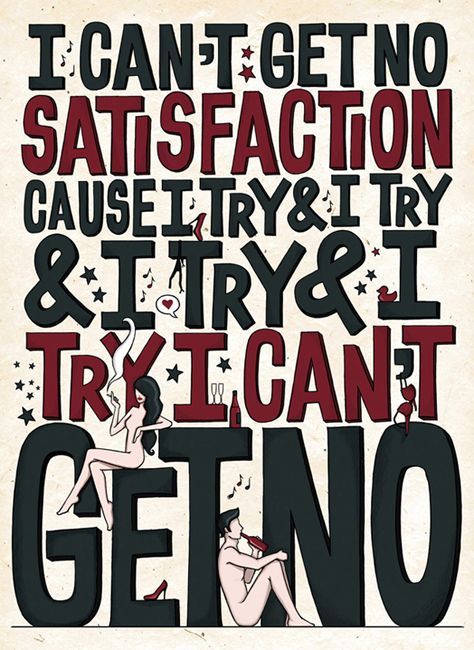 Or: “Satisfied with what one is or has; not wanting more or anything else … Archaic: willing.” (


 APP is the first-ever movie that was written and produced with a 2nd-screen experience in mind, regularly adding content to your phone app while the of the film’s content unfolds on the traditional 1st cinema screen, and thus interrupting the movie’s actual narration.







 1. It’s listening time, the age of attention and conversation. So: Listen to your audiences. Find out who they really are. What they really need, what they want. And where and how they want it.
 2. Observe your competition. Don’t be a “Me Two”. Be different. Be authentically you.
 3. You can only be you, if you know who you are. So: Find your big story, your identity, your character, your DNA. Again, this can only be achieved by listening. To yourself, your own organization from top bottom, left to right. To your audiences (or target groups, as you might call them). See where the delta is, where it matches, where it doesn’t. And somewhere amidst that cacophony of data: there’s your big story. Once you find it: stick to it!
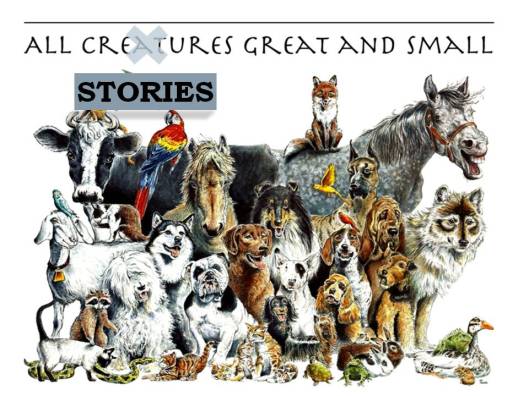 4. Continuously search for all the stories within and without your organization that fill your big story with proof and bring it to life – credibly and authentically, verifiably and true. No matter how small or irrelevant they may seem: They are the only currency you have that differentiates you from your competition. Messages, Brand Ambitions, Visions, and all those bullshit-bingo Whatchmacallits are interchangeable, just hot air, written by expensive agencies to make you feel special. What truly makes you special are your stories, and your people or the people who make up your target audiences, for they are your stories’ heroes. And nobody else!
 5. Become Sinatra, find your way, and then do it your way. If you believe in your idea’s brilliance and capability to tell all your stories great and small, the stories that in the end all make your big story, the accuracy of fit to your character, then go for it! Always follow
 7. Once your pilot’s taken off, make no casualties, no compromises. Be resilient and consequent. The windmills of doubt and Schadenfreude will be blowing into your face from all directions. Don’t let them stop you. And find yourself a trustful companion who will stick by your side, even if one or the other of the journey’s adventures turns out to be a failure or at least different than expected. If this companion is also willing and able to tell your story and stories, a good and true storyteller, who doesn’t necessarily need to be an experts in your field of business, all the better. He (or she) just needs to understand you and be able to translate your management brand identity mission-vision-value-proposition messaging bullshit into stories somebody actually wants to hear.
 8. Even if you’re out (or in) there alone, all by yourself: Be consistent, stick to who you are, what you believe in. Work on your own little moonwalk and surprise audiences and critiques, leave them awestruck.
 9. How do you convince critiques and Benkenträger, prove them wrong? Right: through hard facts and figures they can’t neglect or deny. Seriously, anything procurement sharks, engineers or sales guys trust more than numbers on a paper or screen or power point? So give em what they want: Develop objective KPI’s, measure every customer’s every movement and interaction with your story, present the results in a comprehensible and comprehensive way, and then: Poke your tongue at them, or – if the figures suggest so – have the guts to admit they were right, and it didn’t work.
 10. All along the way, every second of your adventure of finding yourself, understanding your competitors and your audience(s), finding all your stories great and small, finding your formula, pulling it through and sticking to your idea like Jacko to white socks … make sure you do it with someone you trust. Someone on your wavelength, with the same vision, as well as balls and management position to back you up when the FBI is up your fundament to shut your business down.
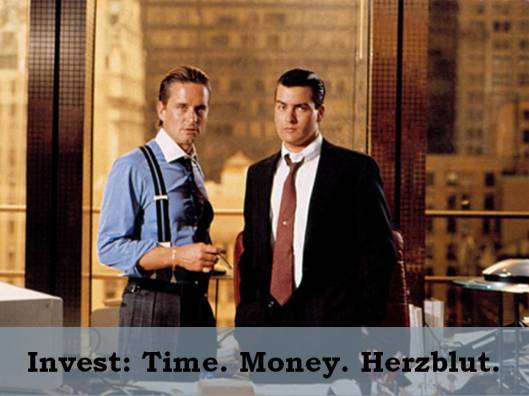 11. Last, but oh so very not least: Every truly unique, innovative and successful business story needs … investment. Not only of money, although it needs a lot of that also, make no mistake; investment in the stories themselves, of course, but also for the stories’ marketing, as nobody is really waiting for your corporate story! But you mainly need to invest a looooot of time, and need to give your story project time to grow, like a tree: from seed to graft to full-grown plant. In a nutshell: You need Herzblut: belief, commitment, passion, and stamina.
 storycodeX