Somewhere between getting lost in transmedia and celebrating AOL („Annual Offline Leave“ – you should try it, helps you understand what Lennon meant when he said that “life is what happens while you’re tweeting” … or something like that), I remembered that I wanted to relive the part of my life when a mix tape (o.k., it was a mix CD, but that sounds so … unromantic, so modern, although the round thing itself is already square) actually changed my life. And at the same time catapulted my relationship with Mister G. to another level of intensity.
It started, as it often does, at work. The place where you spend most of your time, and sometimes are lucky enough to meet interesting people with whom you want to be a little more than colleagues – well aware of the company’s ink saying, but what the heck.
That’s where I met her, over 10 years ago now. And, of course, I mean look at her: She already had a boyfriend. Grrrr. What to expect? So it was waiting mode for God knows how long, felt like decades, which sounds pretty “100 Years of Solitute”-like romantic, but was in fact a couple of months, to be honest. Still … an eternity.
Eventually, not in vain.
The tide was turning, the dark knight’s access to the princess’ castle finally denied, for whatever reason, what should I care? This was my “Over The Top” moment, the knight in white satin’s imaginary baseball cap going in reverse, a unique moment and chance in time that I answered with …
… this mix tape (aka CD) titled “Something Beautiful”.
It contained a hell of a collection of songs, broad hint with a capital B. It was clandestinely handed over by a good, discreet and conspiratorial friend … and then the waiting began. Again.
Decades passed.
Naturally, every one of the selected songs had its own story, a story in itself, a story for me, but also a connection to many of the stories that my Queen of Hearts to-be had been going through (as I had heard through the grape-vine and witnessed as a sideline observer). So hopes were high for a favourable, comprehending, comprehensive and, from a music and lyric lover’s perspective, appropriate reaction. A reaction that would show whether she was the right one. A simple “Oh, thanks” would have been just as disappointing as her not liking the kind of music her stalker was offering her, maybe even selecting the wrong, meaning most obvious song as her favourite one, one of those I had chosen from a “she’ll definitely love this one” perspective.
BUT … after waiting an appropriate while before even answering to this unasked-for present, she immediately named THE one song as her favourite that I had indeed put on this compilation as a kind of test balloon to check whether our two clocks were ticking in synch. THE one song that was my favourite song, from my favourite singer, expressing my favourite mood … a massive Broad hint from destiny. Or so I wanted to interpret it.
And the song was … “Sail Away” by David Gray. A song that has never been the same ever since, has probably reached an unsurpassable pool position on the past ten year’s hot rotation lists, has bestowed on us a very special moment at Mister G.’s 2006 concert in Munich, and has been the “Honey Call” tune on my mobile since mobile phones could read mp3’s.
Who knows, maybe without this joint Sail Away passion, we would never have gone out, never have kissed, never have, never have, never have …
OK, probably, if it was really meant to be in the first place, we would have gone out and done all that other stuff anyway, even if she’d had named the eponymous Robbie Williams song that found its way onto “Something Beautiful”.
“Transmedia storytelling (also known as transmedia narrative or multiplatform storytelling) is the technique of telling a single story or story experience across multiple platforms and formatsusing current digital technologies.
From a production standpoint, it involves creating content that engages an audience using various techniques to permeate their daily lives. In order to achieve this engagement, a transmedia production will develop stories across multiple forms of media in order to deliver unique pieces of content in each channel. Importantly, these pieces of content are not only linked together (overtly or subtly), but are in narrative synchronization with each other.“
A lot of story stuff involved, so I tend to like it, naturally. But also a lot of (digital) technology, channels, platforms. So, really something new? Or just an evolution version of our oldest megatrend, a Storytelling x.0?
Let’s take a look at where the concept stems from:
Transmedia as an idea of collaborative, multi-platform creation and narration origins in the 70’s and 80’s of the last century, in the area of telematic art, where artists experimented with collaborative narration and defined the idea of transmedia.
It soon moved on to the gaming industry, creating so-called Alternate Reality Games (ARG). These are games that, based on the Internet as a main hub, use(d) multiple other technological platforms like telephones, email and real offline mail to tell and simultaneously create different parts of the game’s story in those medial habitats relevant to the players. So not just transmedia telling, but transmedia engagement that requires interaction from every gamer in order to bring the game’s plot to the next level. In other words: “Players interact directly with characters in the game, solve plot-based challenges and puzzles, and collaborate as a community to analyze the story and coordinate real-life and online activities.” (Wikipedia) An early example being Ong’s Hat.
The next transmedia stop was cinema, bringing the whole idea of alternate realities not only to the screen itself (where we had long been used to getting immersed in alternate worlds), but also connecting these to our real, every day lives. The most prominent example certainly being 1999’s “Blair Witch Project”:
This was not only a mocumentary, i.e. a piece of fiction pretending to be documentary, but also accompanied by a variety of additional, supporting pieces of content such as faked diaries, police reports or interviews that in itself engaged the audience in a captivating manner, adding to the cinema story’s apparent verisimilitude.
That was 15 years ago, and just the beginning …
Since a couple of years, also the commercial world of business communications has started to smell the rat? As always, the more consumer-oriented businesses are on the fore-front here with pioneers like Nike or Lego, but it won’t be long before the so-called B2B world will catch up.
So what could all of this mean for business communications and marketing? What can we learn from arts and entertainment?
I recently read this article on transmedialab.org that instinctively made me want to caution a “because we can” attitude that often pairs with technological advancements. The article basically was about the next big thing in cinema and henceforth modern storytelling. Not an R&D future project, but already on the audiences’ threshold.
The article begins with a short analysis of the film “APP”. APP is the first-ever movie that was written and produced with a 2nd-screen experience in mind, regularly adding content to your phone app while the of the film’s content unfolds on the traditional 1st cinema screen, and thus interrupting the movie’s actual narration.
Hmm, I thought.
Do I like this? Not too sure.
I’ll have to find out…
The article moves on with a glimpse into the labs of Disney’s experiments. These are currently limited to 2nd-screen “content interruptions” to back-catalog films like “The Little Mermaid”, but plans are to integrate the transmedia storytelling idea into the initial screen writing of future film productions.
Hmm, I thought, again.
Ambiguity crawling in …
The angel (or is it the devil?) on my shoulder says something like Yalda Uhl who states that “it is very important to engage children in a narration, and that is very difficult to do nowadays with all the distractions and stimulations that surround them. Adding a distraction in cinemas will definitely not help studios to achieve their goal of creating value or attracting an audience that will return to the cinema in the future”. Yes, says the angel (or devil)! REDUCE the distractions! Foster concentration spans! Concentrate on true narration and storytelling to immerse audiences in your story! Don’t just do stuff, because you technically can, audiences will soon get tired and will want to go back to good old traditional storytelling! Transmedia will eat itself for lunch! I knew it!
Then there’s this devil (or angel?) on the other shoulder talking about “story engagement” instead of boring one-way “story telling”. Making it clear to me that the potential of transmedia entertainment and the disruption of handed-down reception models is not only exiting, but in fact the only way to go. For entertainment as much as for business communications, both of them dealing with humans in the end. That today’s young and thus tomorrow’s adult generation will continue to literally gag for regular interruptions in their lives’ routines … and that linear, beginning-to-end storytelling is over, that no one will listen anymore, if there’s not more interactive engagement, audience involvement and multi-channel disruption.
Listening to both of them I begin to see, as with many things, there will be developments that we can’t stop, that will simply happen (because we CAN and because we as humans will simply WANT it), whether I personally like them or not.
Maybe the following
THREE COMMANDMENTS OF TRANSMEDIA STORYTELLING
can help steer technological developments into the right direction:
1. CONCENTRATE ON A GOOD STORY (ALONG THE PATH OF THE STORYCODEX).
Not matter which medium, no matter how many of them; not matter how fragmented and scattered: A well-told, convincing narration offering a high degree of the “Like Me” effect will always work. It doesn’t have to be chronological, but it needs Expectation, Surprise, Conflict and Change. What will change is the people who will create this expectation, add the surprise and conflict spice, foster the narration’s change – this will not be a classical narrator instance anymore, this will be multiple parties engaging in different parts of a story from different angles and perspectives, in different places. But a story it will still be.
2. DON’T LET TECHNOLOGY LEAD THE WAY OF A STORY.
No matter what technological developments the future holds, no matter what devices will surface: Technology is simply an enabler, an easer, a multiplier, distributer, a vehicle. The true power lies in the human nature of communication, conversation, and storytelling.
3. TURN STORY TELLING INTO STORY ENGAGEMENT.
Do listen to, observe your audiences, and maybe(?) realize: The age of (traditional) story TELLING could be over. Never the age of STORY itself, but maybe tomorrow’s audiences will really want fragmentation, want to be stimulated from multiple sources and in multiple places. Of course, THE CONCEPT OF STORY will and cannot change, it’s genuinely human, but: Maybe the future is indeed more about story ENGAGEMENT, involving audiences actively in plot creation or character development. This would radically influence scripting, e.g. by taking devices and reception environments into consideration when writing a story’s various chapters.
Again, all of this holds true not only in arts and entertainment, but also in business, along the infamous, much recited “customer journey”, a journey that is getting more and more complicated, but – if you listen and truly get involved – ever more rewarding for all story and hence conversation participants.
“A part of me pre
A part of me post
A part of me present
One part of me ghost
A part of me wants to run.”
David Gray, “As The Crow Flies” (2014)
This is the story about pre me getting to know Mister G.:
It was sometime in the autumn of 1999, probably a rainy day, as autumn days tend to be. I was hanging around record stores with my friend and flat mate Martin, as so often in those days. In one of the more major-label stores in town, I literally (true story!) tripped over a massive Warner Bros. promotion stand advertising “White Ladder” (which is interesting, as the album was never really released with Warner Bros., but on David’s own label “IHT Records” under license to Warner Music UK Ltd., but probably IHT wouldn’t have had a stand in that record store, so there you go).
Anyway. I don’t know how or why, but somehow I felt, simply by looking at the cover, that I was standing in front of something different, something special, something that didn’t quite fit into this mainstream record store’s usual repertoire. I stepped a little closer, reached out for one of the CD’s that had fallen to the ground …
And then …
…All surrounding ambient sound faded. The atmosphere became eerie, lights dimmed. A distant voice whispered into my ear “This record will change your life!”. It was like I had jumped the tracks of time and space. Fog coming from where the record store’s loudspeakers were, a very mystical Galadriel moment …
And then …
Nothing. Little storyteller’s detour, freedom to exaggerate and put the subtext into perspective. 🙂 In real life, the store was boring and unmystically commercial, no ghosts of past-away singer-songwriter gods around directing me to my new love. I guess…
But I did indeed reach for one of the CD’s I had knocked down off of their pedestal, looked at the simple, yet somehow secretive cover, flipped sides, struck by the design’s focus on content, i.e. songs. Only 10, perfect amount. 8 always too close to an EP, suggesting a lack of material, 12 still ok, but already on the verge of being too much to grasp an album at first listening. Turning the CD back around, there was (and still is, I’ve never taken it off) this sticker with a review quote from “The Times”, saying: “It’s a record that makes your life feel better by its mere existence.” To date, this remains the best compliment for any artistic work that I’ve ever read. And a knock-down argument for me to buy the CD. Which I did.
The mother of all CD cover stickers! You can even still see the hand reaching out to climb the White Ladder. 🙂
Guess this is what you call love at first sight, like meeting a woman in a bar or the office, knowing: This is the one. The beginning.
What happened next: overzealous attempts to get to know this new lover better, discover his history like an archeologist, getting lost in endless hours of hot rotations. Putting flesh to the bones of my new passion at the end of a century, secretly hoping Mister G. would be mine, be mine, remain mine, that he wouldn’t sell, sell, sell (out).
White Ladders’ drum intro alone: a statement, a clear move from raw singer-songwriting (that we know from album 1-3) to courageous upbeat folk pop without the often attached cheesiness. Creating an immediate atmosphere of minor mood turning into major pleasure, a promise the album is able to keep right up to the last chord after 57:17 minutes (excluding UK bonus track “(I Can’t Get) Through to Myself” and US bonus track “Babylon II”).
If that doesn’t get to you, nothing will:
This is the official video incl. David’s congenial ex-drummer Craig McClune, always a sensationally entertaining counterpart to his boss whenever they performed together – and I must admit: I have been missing him ever since he split up with David in 2006!
It’s tough to even select favourite tunes from this perfect album, but if I had to (which I gladly don’t), I’d definitely go for:
I. “This Year’s Love” (in this amazing live version):
II. “Nightblindness”, e-very-specially in this just mind-blowing live version from the London Roundhouse, unfortunately only the audio on YouTube, so close your eyes and escape for 11:05 minutes, worth every second:
III. (of course!) “Sail Away”, a single that literally changed my life … the intro of this live version being my official “Honey Ringtone” ever since it was published on the “Draw the Line” Deluxe Edition:
END OF PART 2.
PART 3 will be exploring the power of a song with its own story to change mine at the probably most important crossroads of my life so far …
Granted, this interpretation might seem far-fetched, but hey, that’s the great thing about having my own blog: I can write, interpret and far-fetch as much as I like, ain’t nobody’s business but mine. 🙂
Thanks to my dear old friend Martin (old as in long-cherished, but also as in older than me, haha…and formerly known as “Müllermartinhallo” to people calling our shared apartment in Schwabing over 15 years ago … Gee, talking about old, is it that long ago???), I have been introduced to the power and beauty of Texan songwriters, bards and troubadours. Often scolded “Country Music” by ignorants (like me back then), “Texas Folk” (aka “Outlaw Country”, “Texas Country” or simply “Texas Music”) is much more, and something completely different. You can clearly hear it in its anti-Nashville sound and instrumentation, which actually brings it much closer to Woody Guthrie’s Folk, Hank Williams’ early Country and Western style, even Blues. One reason why it’s quite rightly often considered “roots music”, music that draws its inspiration and emotional power not only from the roots of American history and culture, but indeed from the roots of mankind, of human being.
Even though it is said that music has a universal power, which is certainly true, it’s the lyrics of many of these Texan songs that do it for me, no wonder: “Lyrical content is the backbone of Texas country”, as the web teaches us. I can indeed understand people simply not responding to hand-made music, raw stuff that sounds more like a garage than a BMG studio, but I do find it hard to appreciate lyrical and poetic numbness in people who don’t just bow down to some of the folk scene’s thrilling lines. And those troubadours like Townes Van Zandt, Kris Kristofferson, Steve Earle, John Prine, or even non-Texans John Gorka and Johnny Cash (unrightfully mistaken as a Nashville guy for too long) simply got it goin on the text side of life. True storytellers of true stories, not by “creative writing course”, but by nature, by heart.
Much has been written about folk music from Texas or elsewhere in the English-speaking world (the language barrier where I would actually draw the line, calling the rest “Volksmusik”or “Folkore”, but that’s surely arguable), and if you want to know all there is to know about Texas Folk, its origins, history, meaning as well as all its great exponents, you’d better ask my old friend Müllermartinhallo himself or read his own words at facebook.com/de.martin.wimmer or deinlandmeinland.com (where he tends to his alter ego Willi Ehms). Nobody knows more about that stuff than him – as I could witness in endless Martini and Ardbeg nights in Munich’s beautiful Schwabing at the end of the last century.
No, I’m not out to write an incompetent take two at a Wikipedia entry or compete with No Depression and other Roots authorities. What made me start this post was actually the short, but soul-pinching lyrics of one of my favorite North American singer-/songwriters Guy Clark (by coincidence from Texas) that have stuck in my heart and mind ever since I heard them first – and have not only accompanied me through life’s many introspective challenges and helped me make one or the other right decision. They have also proven true and helpful in explaining the essence of a good storyteller and good, true and successful storytelling, to myself, and to others.
I may not know all of Guy’s songs (yet), but I know and I LOVE this one for its simplistic beauty and truth, words to engrave into your wedding ring.
The song’s called “Come From The Heart”, very appropriately from his 1988 album “Old Friends”, and is goes like this:
When I was a young man, my daddy told me
A lesson he learned, it was a long time ago
If you want to have someone to hold onto
You’re gonna have to learn to let go
You got to sing like you don’t need the money
Love like you’ll never get hurt
You got to dance like nobody’s watchin’
It’s gotta come from the heart if you want it to work
Now here is the one thing that I keep forgetting
When everything is falling apart
In life as in love, what I need to remember
There’s such a thing as trying too hard
You got to sing like you don’t need the money
Love like you’ll never get hurt
You got to dance like nobody’s watchin’
It’s gotta come from the heart if you want it to work
And the accompanying song sounds like this:
Now … How am I gonna turn the corner on this one? From words that come from the heart, about love and life, to business storytelling? Ah, c’mon! There must be some connection, or did I daydream it while listening to Guy’s song … is it indeed true that there is such a thing as trying too hard, also when blogging about storytelling and trying to find a story connection everywhere?
Ah, got it, I remember: “In life as in love”, it says. And what different is business life to “normal” life anyway? Humans, mostly men, playing a game of thrones, of love and hate, of life and death, even if gladly (most of the time) not in a literal sense, though it can hurt nonetheless. But also people (or colleagues) helping each other through tough times, providing a working environment worth remaining a part of. Or (now I’m really bending this one into shape here!) products (or solutions or services or whatever) actually helping people change their world for the better. These are all the stories great and small that – if true and told in the right way – can convince others and turn so-called “prospects” into customers or employees, or at least brand ambassadors.
And this right way of telling a story is: Truth, Authenticity, Integrity, Righteousness. And Boldness – a virtue most cooperations, especially from the so-called “old economy” or, simpler, the 19th and 20th century, still lack to an appalling degree. The courage to speak (or write) in the true, human and individual voices of each and every one of its employees or customers, even if doing it on behalf of the company. Let’s make one thing clear: There is no corporate voice, cooperations cannot speak, think, feel, or experience anything; it’s their people and the people the get in contact with (communicatively or while making business) who have this human voice that is “unmistakably genuine and can’t be faked” – a voice that can come from the heart, that (if bold and courageous and self-confident enough) speaks like nobody’s listening, like nobody’s watching, like there is no audience.
So here a bone to chew on:
Ignore your audience!
Go on, try it: Tell your story as it is, without thinking about its reception before it’s even written (or filmed)! This may not (right away) be what you audience wants to hear, but it may be what you have to say, what you want to tell.
And it’s gotta come from the heart, if you want it to work.
It’s a crux with these holidays: When you think they’re finally over, the next one is just around the bend. Christmas, birthdays, Saint’s Days, … and Easter. Just around the corner, again.
And even though our beloved Easter bunny (apparently) has limited storage capacities (unlike Santa with his big sack), there are somehow always some small oder medium-sized toys (so-called SMT’s) that find their way into the nest where only chocolate rabbits and sweets should be.
But what if good ol’ Bugs accidently brings a duplicate or something unpopular, something endlessly uncool?
No worries, I have a replacement recommendation for you. I mean for Mr. Bunny, of course.
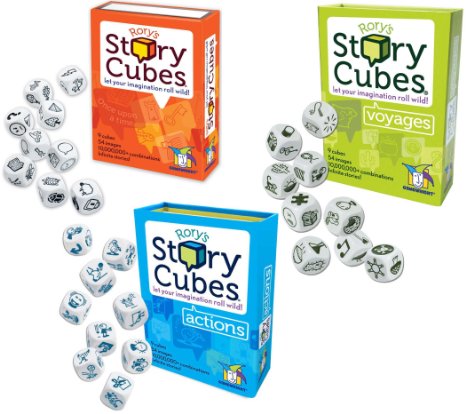
It’s called “Story Cubes”, a simple, entertaining, educating game, and it’s about pure storytelling. The packaging says: “Age 6+”, but it also works with younger children, showing us once again that storytelling is a human gift, engraved into our DNA, a pure form of human communication behaviour for which you need no education, no theory, just infant practice.
“Story Cubes” currently comes in three variations: the “classic” version, the “actions” version, and the “voyages ” version. You can play any variant on its own or randomly combine them.
It goes like this: There are 9 dices (aka cubes) per story cubes set, and every side of every cube carries a different image, like a monkey, the piece of a puzzle or a camera, for instance. The player whose turn it is throws all nine cubes at once. He then needs to bring the cubes into any given order by chaining one image to the next – like chapters of a story. While doing this, he tells the plot of the story he is just laying out on the table – the drama that turns the images from mere symbols into the different acts of a story. This can be short and sweet, or long and epic, depends on the player’s narrative breath and imagination.
What is interesting: The game has no winner or loser. It’s just about telling good, entertaining, surprising stories. Especially for children, but also for us grown-up’s, there’s a high level of creativity and imagination required, in order to have fun and entertain your fellow players.
Plus: You can’t fool kids like you can fool inapt managers or other advertising- and PR-spoilt business individuals: you can’t put anything over them, can’t simply chain one image or word to another and claim it’s a story, when it’s nothing more than bullet points or corporate messages (to stress the manager metaphor once again). And I made the experience, while playing Story Cubes with my daughters, that the infant, naïve rejection of a boring, plot-free succession of words not only happens when they are forced to listen (aka as audience), but also when they are the storytellers themselves. They actually interrupt themselves with the comment “Can I start again? This story is boring, nothing’s happening!”
That’s how they learn the craft – and intuitively follow the StorycodeX of Expectation, Surprise and Change. A CodeX that also needs another vital ingredient, the Hero or Protagonist who this surprising change is happening to, always an organic, unwitting part of my kids’ Story Cubes stories …
But I’ll write about the Hero Phenomenon in a later post – when I’m back from my Easter Holidays, NOT playing Story Cubes, as the rest of the Mr. Bunny’s presents were indeed a slam-dunk. 🙂
So … There is this German pop singer. I really detest his banal, friendship-book-like lyrics, his schlager music style, hate his “I am your favorite son-in-law” attitude. Gives me goose pimples on my eardrum. Kind of my Lord Voldemort of Music, he who must not be named, let alone listened to.
But then something happened and forced me to reconsider … grrrr!
Crime scene, once again, the breakfast table. Sitting together with a little spare time, on our plates all the things children do that have the potential of becoming the source for an unexpected change of perspective. The girls had been singing this song called “Lieder” (“Songs”), My Musical Lord Voldemort’s latest œuvre, for days, almost off by heart. The song had also been permeating my sensitive auricles for weeks, in shopping malls, as background purring in soap operas, or on 40+ radio stations day in, day out, perpetrating the notion that the Lord was doing it again. Ooops style.
The girls’ tweeting at the top of their voices, knowing the lyric’s word by word, if not the meaning, forced (and continues to force) me not only to damage my Spotify playlist image, but also watch the guy’s very unsubtle video on PutPat like a trillion times in a row, and listen a little closer.
Now that really ticked me off! Liquid substance coming for from my lachrymal sacks listening to this kitsch? Ah, c’mon! For no rational reason at all: The melody is mediocre, the arrangement and production middle-of-the-road pop, the lyrics far from anything poetic, intellectually ambitious or sophisticated.
BUT … Voldemort is, in these 3 minutes and 50 seconds, well, not actually telling a story, but implying one. The big story of collective memory, brought to life through a vast number of song titles from the past decades of pop culture. Every single one of these titles hints at a very different memorial story in all the different hearts and minds of its listeners, snowballing emotions that the narrator may be hoping for, but surely cannot know or predict.
It’s a cheap trick, and not particularly well done, judged with the rational part of your self, but it works, with the emotional half. If you put aside your intellectual coolness barrier and let your thoughts take this trip down memory lane. Unbiased and, yes, with the eyes of a child – which is quite fitting in the case of “Lieder”, as most listeners who allow retrogressive tears to well up here probably were in their infancy or adolescence when the mentioned songs were in the charts or en vogue, hence surfaced from the masses of music to become music for the masses and memory makers for many an individual. Including me.
The songs that “Lieder” refers to can be found in the following playlist, and I BET you, you’ll be kick starting your hippocampus within seconds, with images that are completely different from the ones that I have, but I betcha they are there, if you allow them to.
And here’s the list in words, just for the record.
So what do I take from my own personal Lieder Experience, apart from a couple of pudent tears?
Our lives are indeed made up of stories. Not facts, dates and names, it’s the stories that make all of them come to life and live on in our memories, no matter how much time has passed. We will forget the names of people we went to university with, forget the bad marks we got in school, maybe even the name of the girl who dumped us when we were 14. But we will never forget the song that was playing on the radio, on our Sony Walkman or from the loudspeakers at a youth club party when we were feeling sorry for ourselves for whatever reason. Or happy. Or whatever the feeling was. And behind every feeling, there is a story.
So whether it’s Walk like an Egyptian, When Doves Cry, Voodoo Child, Like A Rolling Stone, Just Died In Your Arms Tonight, Bochum, Don’t Let The Sun Go Down On Me, What A Wonderful World, Dancing With Tears In My Eyes, Heroes, Unbelievable, Purple Rain, Firestarter, I Will Always Love You, You Are Not Alone, Welcome To The Jungle, Personal Jesus, Insane In The Brain, When Will I Be Famous, König von Deutschland, End Of The Road, Loser, Killing In The Name Of, or Come As You Are … there’s probably a million stories secured in a million hearts and connected to one or more of these songs, maybe even one or more per specific lyric line.
And that’s the sole, but powerful beauty of “Lieder”.
No, allow me to correct myself, there is indeed another beauty to it: It makes me look forward to the day when my two little ones are big and (hopefully) interested enough in all those pearls that He-who-must-not-be-listened-to is singing about, maybe even like one or the other song or story. And probably the song “Lieder” itself will, whether I like it or not, become a new link in my chain of songs worth remembering – not because they were especially great, but because they remind me of special moments of my life.
Like sitting at the breakfast table, morning in, morning out, with two little voices of Germany listening to, watching and reciting this tune, regardless of the tight schedule before school-kindergarden-work. And reminiscing stories, thoughts, dreams and feelings surfacing after ages of subconscious burial.
After all, with music, it’s like with important scents in our lives: Even though in hindsight they might actually stink, they take you back decades in a flash … and memory is indeed a gracious, merciful and forgiving companion.
Here are 11 ingredients that will get you to your successful business story.
It’s a lot of hard work, but it’s worth the effort. It needs determination, honesty, and courage. The willingness to introspect, listen, experiment, learn, and optimize based on what you learn.
These ingredients, or tips, don’t necessarily need to come in the below order, nor does it suffice to go through all of them just once, over and out, success here you come! There’s a lot of inevitable repetition in these efforts, a kind of “perpetuum mobile of business story”.
Here we go:
1. It’s listening time, the age of attention and conversation. So: Listen to your audiences. Find out who they really are. What they really need, what they want. And where and how they want it.
2. Observe your competition. Don’t be a “Me Two”. Be different. Be authentically you.
3. You can only be you, if you know who you are. So: Find your big story, your identity, your character, your DNA. Again, this can only be achieved by listening. To yourself, your own organization from top bottom, left to right. To your audiences (or target groups, as you might call them). See where the delta is, where it matches, where it doesn’t. And somewhere amidst that cacophony of data: there’s your big story. Once you find it: stick to it!
4. Continuously search for all the stories within and without your organization that fill your big story with proof and bring it to life – credibly and authentically, verifiably and true. No matter how small or irrelevant they may seem: They are the only currency you have that differentiates you from your competition. Messages, Brand Ambitions, Visions, and all those bullshit-bingo Whatchmacallits are interchangeable, just hot air, written by expensive agencies to make you feel special. What truly makes you special are your stories, and your people or the people who make up your target audiences, for they are your stories’ heroes. And nobody else!
5. Become Sinatra, find your way, and then do it your way. If you believe in your idea’s brilliance and capability to tell all your stories great and small, the stories that in the end all make your big story, the accuracy of fit to your character, then go for it! Always follow The STORYCODEX of Expectation, Surprise and Change … and eliminate the taste factor. Nothing worse than management killing an idea just because they can. Because they have a position within your hierarchy that demands of you to ignore or tolerate that they don’t have a bloody clue what they’re talking about. Oh and: If these grey-suited folks demand of you to make their product the hero, remind them of the Ninth Commandment, the one about lying and false witness. A product can NEVER be a hero, and thou shalt never attempt to do so, thou will fail!
6. If your idea, your concept is truly brilliant, unique, something different, maybe even a little crazy: There’ll be armies of Bedenkenträger in their trenches, armed with “Buts” and “We’ve never done this before’s”. This should encourage you, not the opposite: You’re probably on the right track. To get past the army of doubters, call your project a “pilot”. Management feels comfortable with pilots, has a finite touch, limited risk and all that crap.
7. Once your pilot’s taken off, make no casualties, no compromises. Be resilient and consequent. The windmills of doubt and Schadenfreude will be blowing into your face from all directions. Don’t let them stop you. And find yourself a trustful companion who will stick by your side, even if one or the other of the journey’s adventures turns out to be a failure or at least different than expected. If this companion is also willing and able to tell your story and stories, a good and true storyteller, who doesn’t necessarily need to be an experts in your field of business, all the better. He (or she) just needs to understand you and be able to translate your management brand identity mission-vision-value-proposition messaging bullshit into stories somebody actually wants to hear.
8. Even if you’re out (or in) there alone, all by yourself: Be consistent, stick to who you are, what you believe in. Work on your own little moonwalk and surprise audiences and critiques, leave them awestruck.
9. How do you convince critiques and Benkenträger, prove them wrong? Right: through hard facts and figures they can’t neglect or deny. Seriously, anything procurement sharks, engineers or sales guys trust more than numbers on a paper or screen or power point? So give em what they want: Develop objective KPI’s, measure every customer’s every movement and interaction with your story, present the results in a comprehensible and comprehensive way, and then: Poke your tongue at them, or – if the figures suggest so – have the guts to admit they were right, and it didn’t work.
10. All along the way, every second of your adventure of finding yourself, understanding your competitors and your audience(s), finding all your stories great and small, finding your formula, pulling it through and sticking to your idea like Jacko to white socks … make sure you do it with someone you trust. Someone on your wavelength, with the same vision, as well as balls and management position to back you up when the FBI is up your fundament to shut your business down.
11. Last, but oh so very not least: Every truly unique, innovative and successful business story needs … investment. Not only of money, although it needs a lot of that also, make no mistake; investment in the stories themselves, of course, but also for the stories’ marketing, as nobody is really waiting for your corporate story! But you mainly need to invest a looooot of time, and need to give your story project time to grow, like a tree: from seed to graft to full-grown plant. In a nutshell: You need Herzblut: belief, commitment, passion, and stamina.
I had the privilege to be a participating part of the acclaimed DLD (Digital Life Design) Conference in Munich this week. “A global network on innovation, digitization, science and culture which connects business, creative and social leaders, opinion-formers and influencers for crossover conversation and inspiration”, the website says. And that it is.
First time ever for me. Its legendary reputation had traveled eons and light-years to my doorstep as the IT place (as in IT girl, not I-Tee) to be, if you’re even only remotely connected to the Internet and interested in the way digital life continues to change our analogue lifestyles. Worth every minute.
In many ways …
One of these ways I would like to spend a couple of lines on here. Not the networking, not the illustrious guests, the see-and-be-seen aspect or the really inspiring insights I gathered from almost each and every panel or presentation, not even the red-carpet, see-and-be-seen-even-more late-night party, although I quite enjoyed that one, too.
No, it’s the way speeches were held at this conference (as at most I’ve ever been to) and the very rare examples of good storytelling applied in these speeches that I will ponder over a little. I’m not talking about the contents, I’m talking about their structures or non-structures that are mainly based on power point hooks, not narratives. I mean, it’s really amazing: You have so many bright minds, freaks and geeks, young talents and old stagers summoned in one place for three days. They speak about their latest apps, business models, technology, their visions of the future … and all too often you can hardly avoid noticing that most of them do indeed have a story to tell. BUT: They don’t! They don’t apply any storytelling techniques to making their visions, facts and insights less bullet-pointy, less complete, but more compelling, more memorable, more narrative. There was even a panel on “Digital Storytelling”, a very promising title, but in the end merely a discussion over video formats, technologies, platforms and, again, business models. OK, maybe the latter is a very understandable and legitimate topic in a world where traditional businesses are eroding and everyone is desperately looking for straws to clutch at, but it’s not always entertaining for the audience.
So what did many of those speakers do wrong? Easy: They were mainly speaking facts, figures and features. And data and dollars. All in the name of the user’s experience (will always hate that defamation of a word for humans!), but it was mostly the experience of an arbitrary abstract being using technology they were speaking about. Not about concrete human beings, heroes or anti-heroes, their emotions, their dramas that led to the creation of this app or that service (even though maybe the rhetoric of many speeches was dramatic and good and suggested a narrative, where, however, there was none). And I’m not saying that they were not interesting or inspiring regarding facts and ideas transported – after all, you had preachers preaching to Catholics anyway, so ears and brains wide open. I’m just stating the lack of story narrative in the way they were presenting.
Although there were some remarkable exceptions to this rule – or maybe in the land of the blind, the one-eyed man is king?
Mahbod Moghadam, Co-Founder of www.rapgenius.com, a website that only at first sight is something for rap fans, actually unveils the curtain to probably every art’s and even every brand’s future. It allows fans and enthusiasts to make their own annotations to any kind of rap lyric, enriching it with their own stories that connect them personally, to a song and its content. “Annotate My Brand” was the title of the panel Mahbod was on, and he not only used his 45 minutes on stage and his youngster charms well to exchange business cards with Hublot’s Jean-Claude Biver and Missioni’s Angela Missioni. He most of all ignited the audience with his enthusiasm and the great stories he had to tell of the platform’s early days and collaborations with notable rap performance such as Jay-Z or Kayne West. name-dropping was maybe a cheap trick that helped, but his stories stuck. Left me hoping for the extension of his ingenious annotation site to my musical preferences as well as with the notion that: Not only as an artist, you’re work becomes a public good, open to recipients’ annotations; the same holds true for brands. Control is over. Your story isn’t your story anymore, it’s everyone’s. And everyone can and will use this opportunity, and that’s not a threat, it’s a great opportunity to crowd-source your own brand and your company’s reputation. Intriguing thought.
Then there was Ankur Jain, Founder and CEO of HUMIN, “a technology company working to make technology more human”, as his website says. And he started his speech perfectly in this sense: With a human story. With a hero (himself) and a “do you remember when” introduction, pulling the audience (at least those over 25) into their own past, enabling identification with a situation everybody knows: Once upon a time, it took you ages to find out the telephone number of a girl you were interested in, once you had it, you had to take a walk to the nearest telephone box to try to call her with your last coins (as you’re parents were kind of anal on the phone bill issue in the pre-flat-rate era), then dialing the number you had researched, waiting for the ring, hoping her dad wouldn’t pick up the phone, then he did, you hung up, money gone, off back home. Just an anecdote, maybe, but a good, personal intro into explaining what his app was supposed to do: seamlessly connect you with all your contacts on all your various social platforms and address books. Left me entertained and willing to download his app and try it. Which I did.
Or Whatsapp’s Co-Founder and CEO Jan Koum. His visions for his very successful messaging service as well as the sympathy level for him as a person and his work stayed on a low-level for me, even though I love his app, UNTIL: He told the very touching and comprehensible story of this young man emigrating from Ukraine to the USA who missed his parents and family so much, but couldn’t afford regular calls, let alone trips home – so he invented Whatsapp to stay in touch with the people important to his life, instantly, whenever, and economically. I bought into the idea and rationale, and understood even better why I make such frequent use of this little green tile on my iPhone.
What I’m getting at, and what is my personal take-away from three days of insights into digital trends for life and business and business life, is best summed up with one of the many great quotes of one of the great lost storytellers and story-understanders, Steve Jobs: “No matter how good the technology, it will not turn a bad story into a good story.” [http://goo.gl/H1ZCuy] Or a bad speech into a good speech, I might add.
So I’d like to end this stream of thoughts with two videos that are better tutorials for a good speech than anything I could write here:
Steve Jobs’ legendary 2005 Stanford Commencement Address, which is any prime example of perfectly structured story-in-speech, not filmed, not written, but spoken aka told (even if not off by heart, but from the heart). Three little stories turning into one big story at the end, leaving a clear message without needing to name it. Please enjoy this one from beginning to end:
And this more tutorial-like video by Nancy Duarte, an American writer and graphic designer, well-known for her two best-selling books “Resonate: Present Visual Stories that Transform Audiences” and “slide:ology: The Art and Science of Creating Great Presentations”. A very nice summary of how you can mix pure facts with story in a power point, as you mostly need to do in business presentations or speeches, nevertheless not bore to death with report style, but also not get lost in anecdotia or storyland.
So, what do you think? Agree? Disagree? Why?
In any case: I’m happy to see you again soon, here, where the story goes on … soon.
When are you old? When you grow grey hair? When your six-pack turns to pudding, your “V” into a pyramid? When you can’t become twice the age you are anymore?
When you start using Old Spice?
C’mon! Which man under the age of 150 would use this auld odour, the smell of which used to make your wrinkles multiply within a nostril’s movement?
Or so I recalled.
I confess, I’ve tried the spice, just recently. And I totally blame ONE person for this: The “Old Spice Man” telling his imaginative, fairytale-like series of quick stories (or advertisements, as the vulgar tongue might call it) of “The Man Your Man Could Smell Like”.
Almost three years after the campaign’s launch and maybe a year after I became seduced by these funny and promising Old Spice Man stories (and stories they are, even without an classical plot within the 20-30 seconds, but the promise of one hidden in every one), I decided to believe the fairy tale, standing in front of the shelf of my local drug store, suspiciously looking over my shoulder for friends (or foes) witnessing my imminent bold (and maybe embarassing) action … and let a sample of Old Spice’s new “Wolfthorn” deodorant slip into my shopping cart, put it on the cash desk conveyor belt like that young fellow in the old condoms ad you might remember – and into my bag.
A day later, trying it on at home, I found out: It works! The story IS true!
Why? My little eight-year-old daughter came up to me and said: “Dad, now you smell like a real man!”
True story, this.
So, and since there is always a moral to a blog, here we go:
Contradicting my beloved Cluetrain Manifesto’s 74th thesis claiming that “we are immune to advertising”, I do believe, in the name of the wolf’s thorn, that advertising does still work, even today, at the end of the one-way age of broadcasting. IF it tells a story, offers or promises a plot, implicitly or explicitly, but never violates the storycodeX of EXPECTATION, SURPRISE and CHANGE as the constant beads of its narrative chain. And if you find out afterwards that the ad didn’t promise heaven on earth, but actually offered you an element of truth you could verify through your own experiences with the product.
Which I could. OR is there a more convicing truth out there than the one seen through the eyes of a child – or better: smelled through her sensitive nose? 😉
What’s reassuring: I’m not alone (47,475,478 views and 41,348 comments on the first spot alone). And if you search for “old spice sales after commercial ” on Google, you can find out that the campaign is not just a viral and image success: sales increased by 107% alone in the first twelve months after the launch of this commercial. Not bad, old man!
So, what do you think? Agree? Disagree? Why?
In any case: I’m happy to read your voice and see you again. Here, where the story goes on … soon.
Went for a walk this morning (well, wasn’t really morning, but pretty much felt like it) and maybe it was the unexpected and unwonted amount of oxygen rushing through my synapses, but: After about half an hour of contemplating over the best way to maybe start a series of “What IS story? And what ISN’T?” posts, the plethora of oxygen carried my Hippocampus back 20 years in time.
Back to my first days at university, just after the first intro session with my future literature science professor, where he answered every freshman’s burning question “What should a Germanist read?” with a brief but sharp “Everything!”. I’ve tried for the past 20 years, I really have, but …
See what happens when you get too much oxygen and stuff??? What I wanted to get to is: Just a semester or two later, I was able to counter and at least give new first-semesters two answers to the question “What are the most important things you will learn during your studies?”:
Secretaries are more important than professors.
You don’t need to know a lot, you only need to know someone who knows or somewhere to look it up.
… And suddenly, after about 45 minutes of absent-minded walking, I knew where to start. With my man Kurt Vonnegut (humanist, pacifist and influential “counterculture novelist” of the twentieth century, as the NY Times called him after his passing in 2007) who probably indirectly gave the most accurate and at the same time most entertaining definition of story and non-story that at least I have seen or read to date – and remember: I haven’t even come close to my professor’s everything goal!
Take time for and enjoy these 4:37 minutes, they’re worth every invested second.
My lessons from this piece of infotainment are (business people hear, hear, we got some lessons learned, bullets, and guidelines coming your way right here):
Stories move in waves. Every piece of content that doesn’t move beyond the B-E Meridian is NOT a story.
Acknowledge the Negative. Either as starting point, turning point, climax or – and that scares the shit out of Hollywood as much as the Marketing work – as denouement.
With the words of one of the world’s most acclaimed screenwriting lecturers Robert McKee: “Essentially, a story expresses how and why life changes.” (http://hbr.org/2003/06/storytelling-that-moves-people/.Meanin)g: No change, no drama, no story. A flat B-E Meridian has the same consequence for a story like a flat ECG wave for a human being: It’s dead.
Oh yes, human … that’s another marketing must of the last couple of years. Show people in your video, and there you have a story. Yeah, right.
Why it’s not quite as simple as that, but much more rewarding when you go the hard way, and why this is just the tip of the storyberg: Next time.


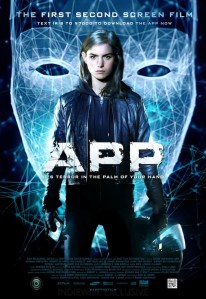 APP is the first-ever movie that was written and produced with a 2nd-screen experience in mind, regularly adding content to your phone app while the of the film’s content unfolds on the traditional 1st cinema screen, and thus interrupting the movie’s actual narration.


 1. It’s listening time, the age of attention and conversation. So: Listen to your audiences. Find out who they really are. What they really need, what they want. And where and how they want it.
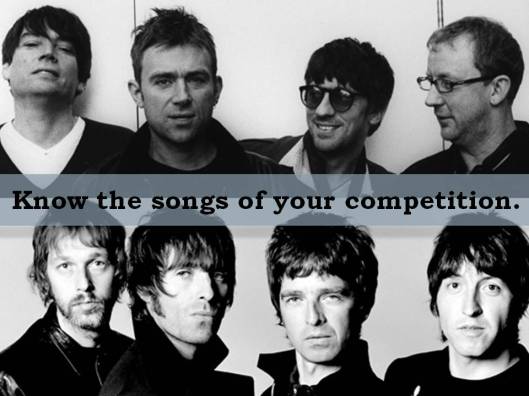 2. Observe your competition. Don’t be a “Me Two”. Be different. Be authentically you.
 3. You can only be you, if you know who you are. So: Find your big story, your identity, your character, your DNA. Again, this can only be achieved by listening. To yourself, your own organization from top bottom, left to right. To your audiences (or target groups, as you might call them). See where the delta is, where it matches, where it doesn’t. And somewhere amidst that cacophony of data: there’s your big story. Once you find it: stick to it!
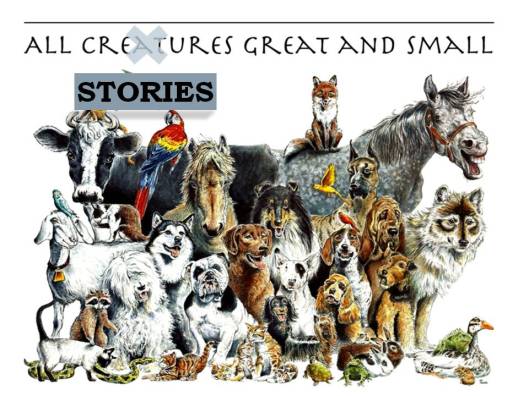 4. Continuously search for all the stories within and without your organization that fill your big story with proof and bring it to life – credibly and authentically, verifiably and true. No matter how small or irrelevant they may seem: They are the only currency you have that differentiates you from your competition. Messages, Brand Ambitions, Visions, and all those bullshit-bingo Whatchmacallits are interchangeable, just hot air, written by expensive agencies to make you feel special. What truly makes you special are your stories, and your people or the people who make up your target audiences, for they are your stories’ heroes. And nobody else!
 5. Become Sinatra, find your way, and then do it your way. If you believe in your idea’s brilliance and capability to tell all your stories great and small, the stories that in the end all make your big story, the accuracy of fit to your character, then go for it! Always follow
 7. Once your pilot’s taken off, make no casualties, no compromises. Be resilient and consequent. The windmills of doubt and Schadenfreude will be blowing into your face from all directions. Don’t let them stop you. And find yourself a trustful companion who will stick by your side, even if one or the other of the journey’s adventures turns out to be a failure or at least different than expected. If this companion is also willing and able to tell your story and stories, a good and true storyteller, who doesn’t necessarily need to be an experts in your field of business, all the better. He (or she) just needs to understand you and be able to translate your management brand identity mission-vision-value-proposition messaging bullshit into stories somebody actually wants to hear.
 8. Even if you’re out (or in) there alone, all by yourself: Be consistent, stick to who you are, what you believe in. Work on your own little moonwalk and surprise audiences and critiques, leave them awestruck.
 9. How do you convince critiques and Benkenträger, prove them wrong? Right: through hard facts and figures they can’t neglect or deny. Seriously, anything procurement sharks, engineers or sales guys trust more than numbers on a paper or screen or power point? So give em what they want: Develop objective KPI’s, measure every customer’s every movement and interaction with your story, present the results in a comprehensible and comprehensive way, and then: Poke your tongue at them, or – if the figures suggest so – have the guts to admit they were right, and it didn’t work.
 10. All along the way, every second of your adventure of finding yourself, understanding your competitors and your audience(s), finding all your stories great and small, finding your formula, pulling it through and sticking to your idea like Jacko to white socks … make sure you do it with someone you trust. Someone on your wavelength, with the same vision, as well as balls and management position to back you up when the FBI is up your fundament to shut your business down.
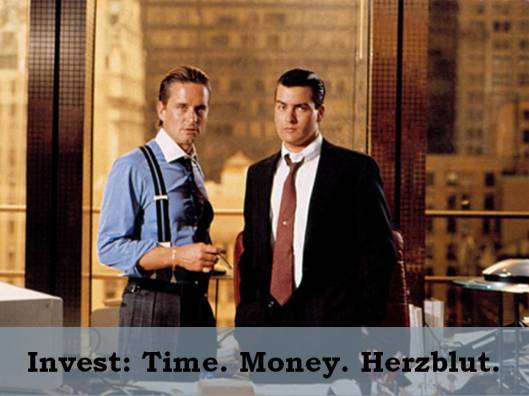 11. Last, but oh so very not least: Every truly unique, innovative and successful business story needs … investment. Not only of money, although it needs a lot of that also, make no mistake; investment in the stories themselves, of course, but also for the stories’ marketing, as nobody is really waiting for your corporate story! But you mainly need to invest a looooot of time, and need to give your story project time to grow, like a tree: from seed to graft to full-grown plant. In a nutshell: You need Herzblut: belief, commitment, passion, and stamina.
 storycodeX